


Countdown Timers & Fake Scarcity: Google Merchant Center Suspension Risk (2026)
March 20, 2026
Google Vehicle Ads Feed Requirements: What Dealers Get Wrong
March 23, 2026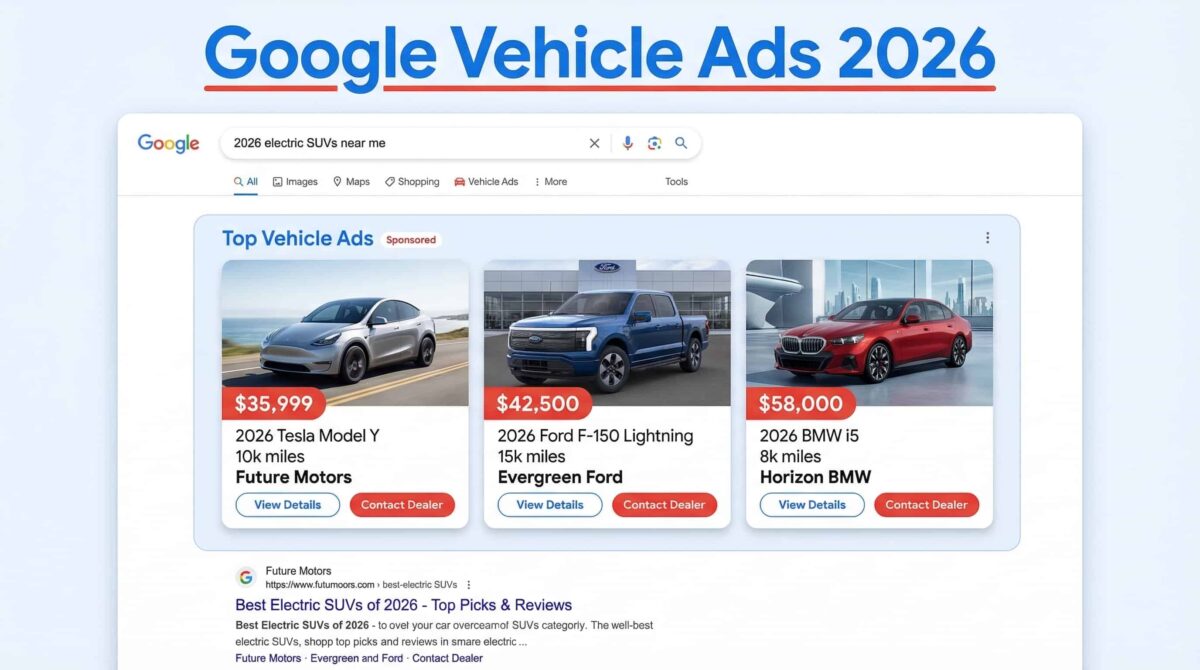
Most dealerships running Google Ads right now are using the wrong format — and it’s costing them qualified leads every single day.
Google Vehicle Ads aren’t new, but what’s happening with them in 2026 is. Major platform changes in the last six months have made them more powerful, more accessible, and frankly more necessary than they’ve ever been. If you manage ads for a dealership — or you own one — here’s exactly what you need to know.
What Google Vehicle Ads Actually Are
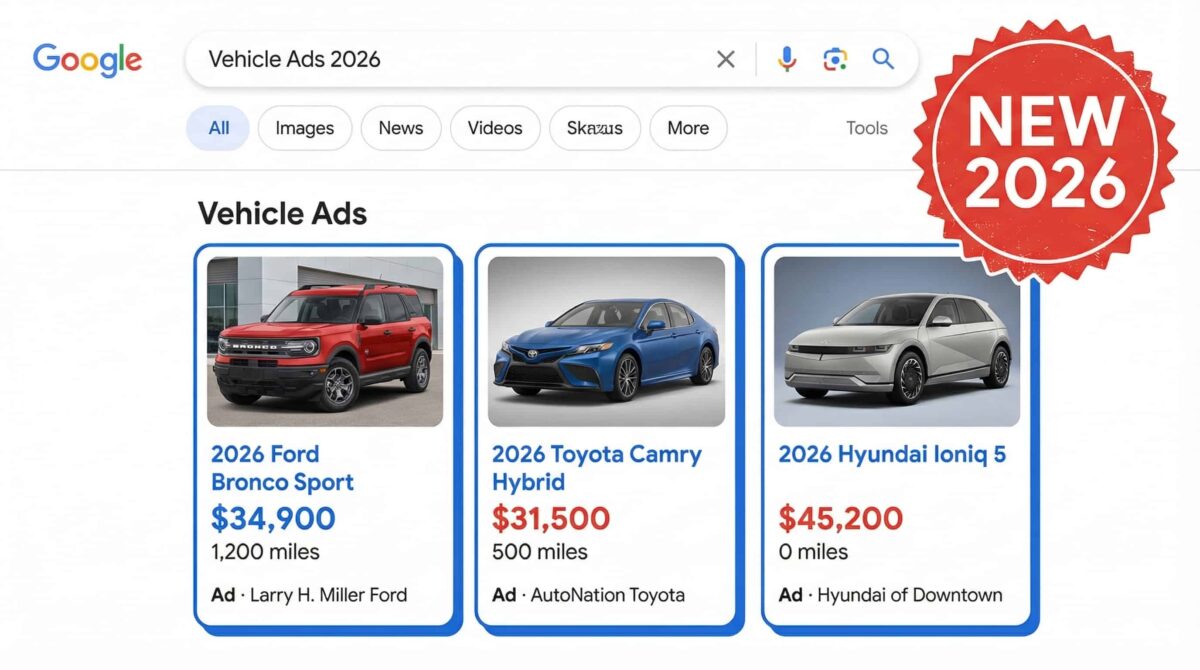
Think of them as Shopping ads for cars. Instead of a generic text ad sending someone to your homepage, a Vehicle Ad shows your actual inventory — a photo of the specific vehicle, plus make, model, year, price, mileage, and your dealership name — right on the search results page.
The buyer sees all of that before they click. Which means the people who do click are already pre-qualified. They know what the car looks like. They know the price. They’ve decided they’re interested. That’s why the conversion rates are so much stronger than standard search.
Many advertisers managing Vehicle Ads campaigns have reported seeing 40–50% more conversions at a lower cost per lead compared to legacy formats. It’s not a small difference.
How It Works in 2026
The setup runs through Google Merchant Center and Google Ads. You upload a vehicle feed — ideally updated daily — that includes VIN, price, make, model, trim, condition, mileage, high-quality photos, and a direct link to each vehicle’s detail page. That feed connects to your campaigns, and Google’s AI does the matching.
The primary campaign format right now is Performance Max with vehicle feeds. That means one campaign can push your inventory across Search, YouTube, Display, Gmail, and Discover simultaneously. Google’s algorithm decides where to show which vehicle to which person based on intent signals.
Feed quality is everything here. Dealers who run incomplete feeds — missing trim data, outdated inventory, blurry photos — quietly hemorrhage impressions and CTR without ever knowing why. Complete feeds with professional photos can lift impressions by 15–25% and CTR by up to 30%. That’s not a minor optimization. That’s the difference between a campaign that performs and one that doesn’t.
What Changed in the Last Six Months
A few developments are worth paying attention to specifically.
In October 2025, Google enforced a strict out-the-door pricing policy. The price you show in your Vehicle Ad has to be the real, complete price the buyer pays — all mandatory fees included. If your landing page price doesn’t match your feed price exactly, you risk disapprovals or account suspension. Dealers who weren’t already syncing their feeds and websites tightly had to fix that fast.
In November 2025, Google shut down the free organic Vehicle Listings feature entirely. That free inventory visibility that dealerships had been using through Google Business Profiles — gone. Paid Vehicle Ads are now the only way to get your inventory showing directly in search results.
In January 2026, Google added Call Assets directly inside Vehicle Ads through Performance Max. Shoppers can now call your dealership with one tap from the ad itself on mobile, or see your phone number directly on desktop. Phone leads in automotive close faster and at higher lifetime value than form fills — so this is a bigger deal than it might sound.
The March 2026 Update Almost Nobody Is Talking About
This one is new enough that most dealerships and agencies haven’t caught up yet.
Google launched Vehicle Feeds on Search Ads in March 2026. What this means practically: your existing standard Search campaigns can now automatically display a live inventory carousel alongside your text ads. No new campaign required. The system pulls from your Merchant Center feed and matches relevant inventory to the search query automatically.
Someone searches “used Toyota Camry near me” — your text ad shows up, and now a scrollable carousel of matching vehicles from your inventory appears right below it. Each vehicle card links directly to its VDP. The whole thing activates once your accounts are properly linked.
This is significant because it means dealerships that already have Search campaigns running can layer in inventory visibility without rebuilding their campaign structure. It’s a low-friction upgrade with real impact on qualified traffic.
What to Do Next
If you’re not running Vehicle Ads yet, the starting point is enabling the Vehicle Ads program in your Merchant Center Add-ons, getting your feed built correctly, and attaching it to a Performance Max campaign. The technical requirements aren’t complicated, but feed quality and policy compliance are where most campaigns succeed or fail.
If you’re already running Vehicle Ads, now is the time to audit your feed completeness, make sure your pricing is fully OTD-compliant, check that Call Assets are active, and look at whether Vehicle Feeds on Search Ads makes sense to layer in.
The dealerships that get this right in 2026 are going to have a significant advantage over the ones still running plain text search ads and wondering why their cost per lead keeps climbing.
🚗 Setting up Google Vehicle Listing Ads? Download my free checklist — covers everything from GMC feed setup to Performance Max campaign config to conversion tracking. Free PDF → https://googlevehiclelistingadschecklist.websolutions.ph/
Want a second set of eyes on your current Google Ads setup? I work with dealerships and automotive businesses on Upwork — link in the comments: https://www.upwork.com/freelancers/nazdiocampoaimarketing
