


Is Google Ads Still Worth It in 2026? (Honest Answer)
May 1, 2026
Google Ads Minimum Budget: What You Really Need to Start
May 6, 2026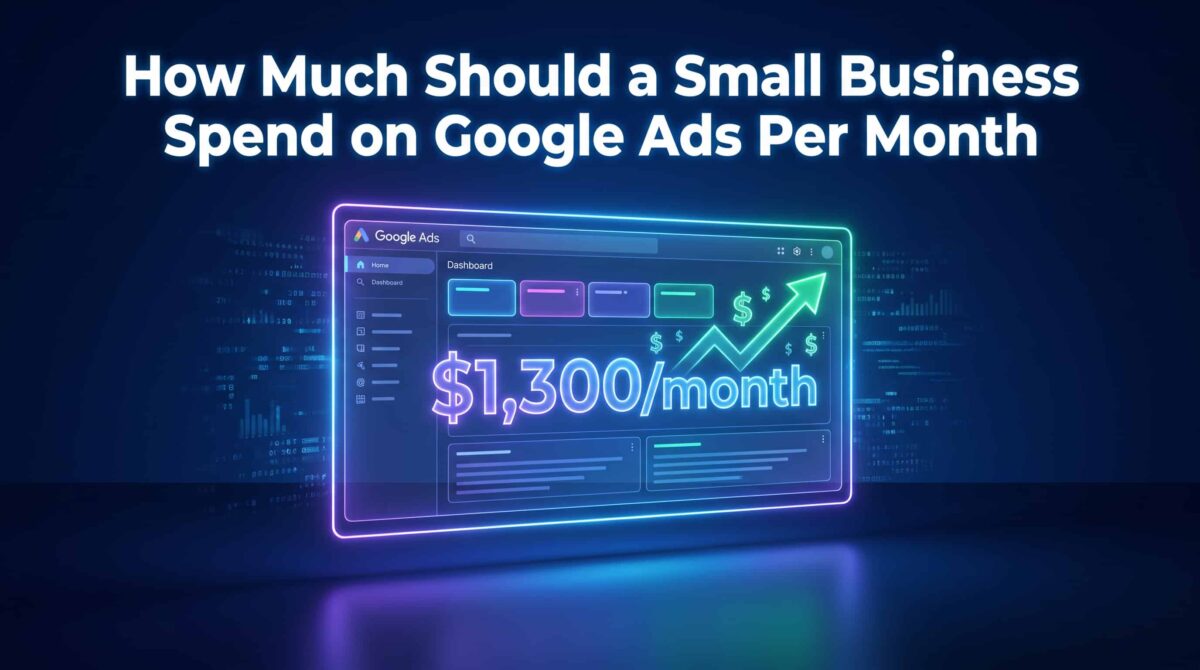
Here’s something I’ve noticed after eight-plus years of managing Google Ads accounts — I can usually tell whether a campaign is going to fail before I even look at the ads.
I just look at the budget.
Not because more money equals success. That’s not it. It’s because most small business owners pick their Google Ads budget based on what feels comfortable. They look at their bank account, pick a number that doesn’t make them sweat, and call it strategy.
That’s not a strategy. That’s a hope.
If you’ve ever wondered “How much should I actually spend on Google Ads each month?” — this is the framework I wish more small businesses understood before they ever clicked “launch campaign.”
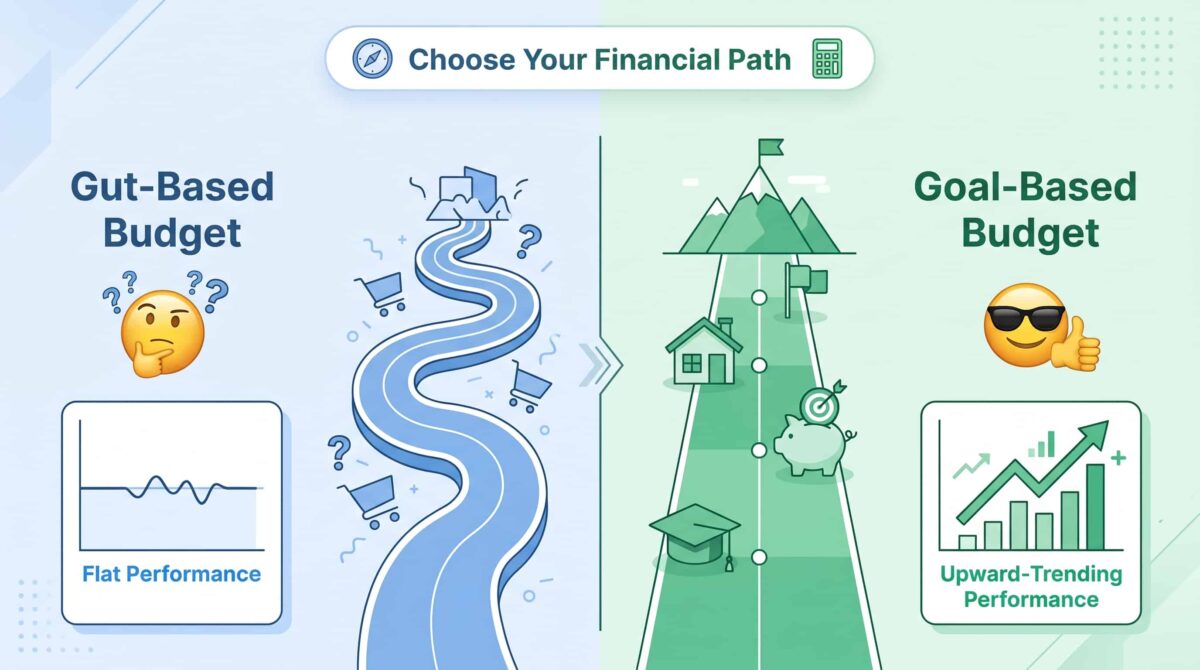
The Wrong Way to Set Your Budget
Most business owners think about it like this: “I have $500 a month I can afford. Let’s start there.”
The problem? That number isn’t tied to anything. It’s not tied to how many leads you need. It’s not tied to what a lead is worth in your industry. It’s not tied to what your campaigns actually require to generate consistent results.
You’re guessing — and Google’s algorithm doesn’t reward guessing.
The Right Way: Goal-Based Budgeting
Here’s the formula I use with every client. It’s simple. You can run the math right now on the back of a napkin.
Step 1 — Define your lead target. How many qualified leads do you actually need every month to hit your revenue goal? Be honest. If you’re a service business doing $20K/month and your average client is worth $1,000, you might only need 20 qualified leads (assuming a 50% close rate, that’s 10 new clients).
Step 2 — Find your industry’s average cost per lead. This varies a lot. For most service businesses, you’re looking at somewhere between $40 and $80. Legal and SaaS run higher. Retail and local services can run lower. Tools like WordStream’s industry benchmarks or just looking at your past campaign data will get you in the ballpark.
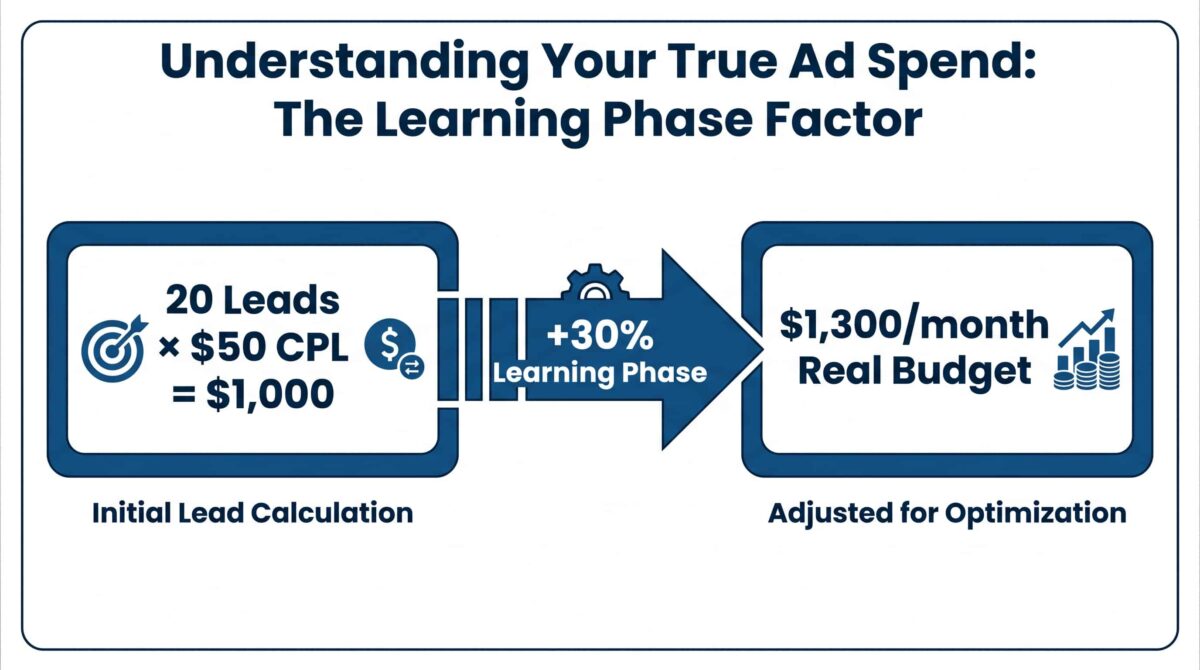
Step 3 — Multiply. 20 leads × $50 cost per lead = $1,000 baseline budget.
That’s your floor. Not your ceiling.
The Adjustment Most People Miss
Here’s where things get real. That $1,000 number assumes a lot of things are already in place — clean conversion tracking, a landing page that actually converts, and campaigns that have moved past the learning phase.
If you’re starting fresh? Add at least 30% for the learning phase. Google’s smart bidding needs data to optimize, and that data costs money to collect.
So your $1,000 baseline becomes more like $1,300 in your first 60-90 days. Once your campaigns mature and you’ve got clean conversion signals coming in, you can usually tighten that back up.
The Part Nobody Wants to Hear
In competitive markets — legal, home services in major metros, anything with high CPCs — really small budgets often don’t generate enough conversion data for Google’s algorithm to optimize properly.
I’ve seen this play out hundreds of times. A business spends $400/month, gets 3-4 conversions, decides Google Ads “doesn’t work,” and walks away.
It’s not that the platform doesn’t work. It’s that they never gave it enough fuel to do its job.
Smart Bidding strategies like Target CPA and Maximize Conversions typically need 15-30 conversions in a 30-day window before they really hit their stride. If your budget can’t generate that volume, you’re fighting the algorithm instead of letting it work for you.
So What’s the Right Number for You?
Run the formula:
- Leads needed per month × industry CPL = baseline
- Add 30% if you’re starting fresh
- Sanity check it against your market’s competitiveness
If the number that comes out feels too high, you have two real options: lower your lead target (and revenue expectations), or focus your budget on a tighter geography or more specific keyword set so your dollars go further.
What you should not do is pick a smaller number that “feels comfortable” and hope for the best. That’s how good campaigns die in their first 30 days.
Final Thought
Set the budget around the goal. Not your gut.
It’s a small mindset shift, but it changes everything about how your campaigns perform.
