


Google Ads for Junk Removal: 3 Fixes That Actually Work
April 30, 2026
How Much Should a Small Business Spend on Google Ads Per Month? (The Real Formula)
May 5, 2026
Is Google Ads Still Worth It in 2026? The Honest Answer from 8+ Years of Experience
I get asked this question almost every week.
“Naz, is Google Ads even worth it anymore?”
And honestly? I understand why people ask. Costs are up. Privacy rules are tighter. The platform keeps shifting. A lot of business owners I talk to are second-guessing their ad spend — and some are pulling the plug completely.
But here’s the thing.
After managing Google Ads for 8+ years, I can tell you the answer isn’t a simple yes or no. Google Ads still works in 2026 — but most businesses shouldn’t be running it.
Let me explain what I mean.
The Short Answer
Google Ads is still one of the highest-ROI channels available to businesses today. I’ve seen clients scale from $2 ROAS to $20+ ROAS using the same platform. The technology is better than ever. The targeting is smarter. The AI is genuinely doing work that used to take entire teams.
So why are so many businesses failing at it?
Because they’re ignoring the fundamentals. And in 2026, with rising costs and smarter algorithms, those fundamentals matter more than ever.
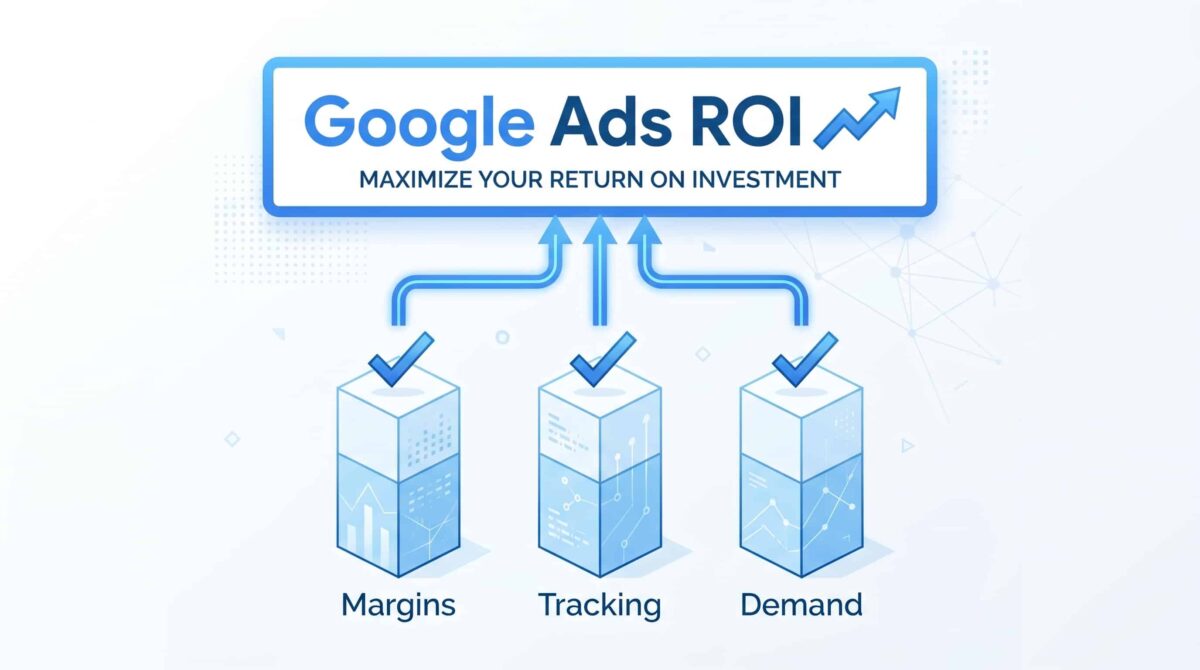
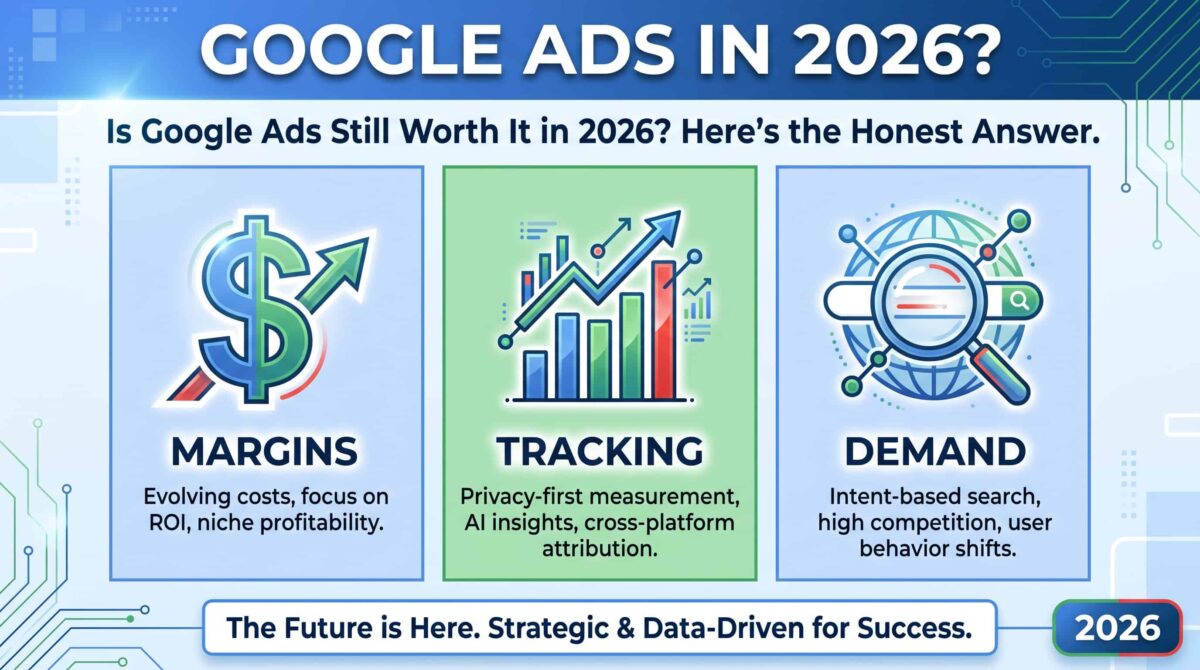
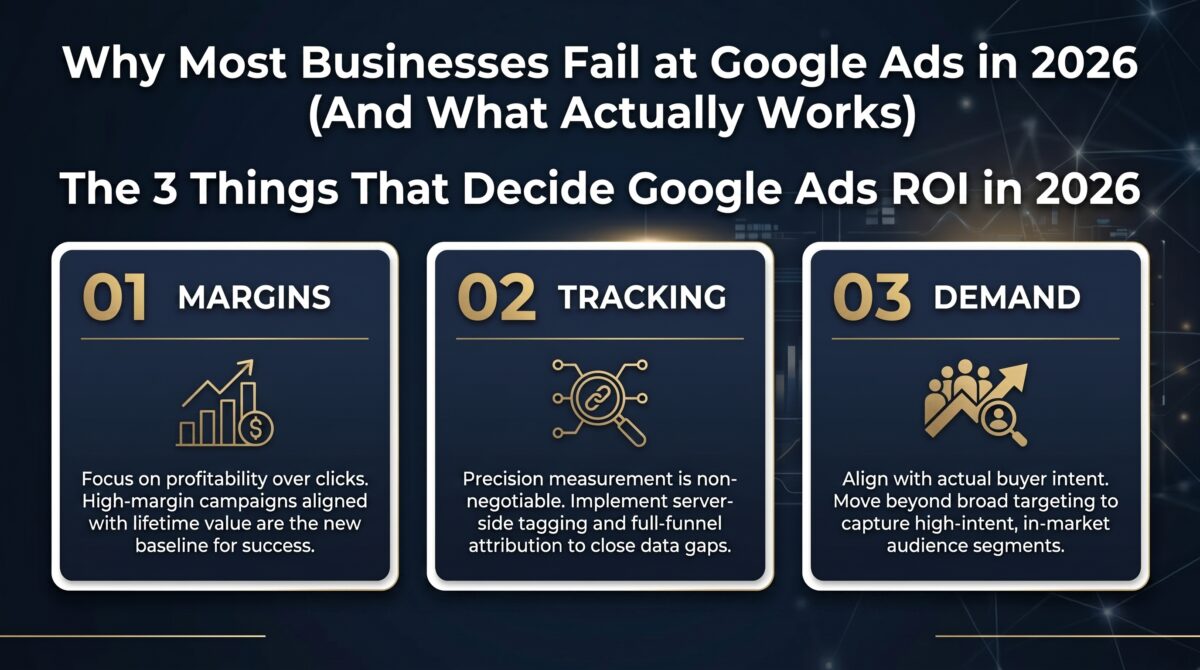
Here are the three things that actually decide whether Google Ads will work for your business this year.
1. Your Margins
This is the one nobody wants to hear — but it’s the one that matters most.
Cost-per-lead has climbed roughly 12% year over year. Average CPAs across industries are hovering around $70 per lead in many sectors. If your profit per customer can’t absorb those numbers, Google Ads will drain your cash flow faster than you can react.
I’ve had to turn down clients because of this. Not because their product is bad. Not because their brand is weak. But because their math simply doesn’t work. When your margins are thin, every rising CPC eats directly into your bottom line — and you end up scaling your losses instead of your profits.
Before you spend a dollar on Google Ads, calculate your maximum allowable customer acquisition cost. If Google Ads can’t deliver conversions below that number, you need to either fix your offer or find a different channel.
2. Your Tracking
Here’s where most businesses quietly sabotage their own campaigns without realizing it.
In 2026, Google’s ad auction runs heavily on intent signals and user behavior — not just keywords. That means Google’s AI is constantly learning from the conversion data you feed it. Clean data in, good leads out. Dirty data in, bad leads out.
Most accounts I audit have at least one major tracking issue. Duplicate conversions. Missing events. Incorrect conversion values. GA4 not talking properly to Google Ads. And every single one of those errors teaches the algorithm to optimize toward the wrong thing.
Here’s what I tell clients: tracking isn’t just reporting anymore. Tracking IS the strategy. If you can’t trust your data, you can’t trust your results — and the AI can’t do its job.
Before scaling any campaign, audit your conversion tracking. Check your event counts against your CRM. Make sure conversion values reflect actual business impact. Clean tracking is the single highest-leverage thing most advertisers can do right now.
3. Your Demand
This is the part most marketers avoid talking about — probably because it’s uncomfortable.
Google Ads cannot create search demand out of thin air.
If nobody is searching for what you sell, no campaign structure, no bidding strategy, and no AI optimization will save you. Google Ads works because it captures existing intent. It doesn’t manufacture it.
I see this constantly with new or unusual products. Founders assume that if they just “put ads in front of people,” sales will follow. But Google Ads is a pull channel, not a push channel. The people who convert are already looking for a solution — you’re just making sure they find you instead of your competitor.
Before you invest in Google Ads, check your search volume. Use Google Keyword Planner, look at competitor campaigns, see what’s actually being queried. If the demand isn’t there, you need a different channel to create it first — social media, content marketing, or even traditional outreach. Then Google Ads can capture the intent once it exists.
So — Is Google Ads Worth It in 2026?
Yes. For the right business.
If you have strong margins, clean tracking, and real market demand, Google Ads is still one of the most powerful growth channels available. The platform has evolved, but the fundamentals of success haven’t changed — they’ve just become more important.
If even one of those three pillars is broken, though? You’ll burn through budget without results. And no amount of “optimization” will fix it.
The businesses winning with Google Ads in 2026 aren’t the ones with the biggest budgets. They’re the ones with the right fundamentals.
Want Help Figuring Out Which Gap Is Costing You Money?
I offer a free Google Ads audit where I’ll walk through your account, identify exactly which of these three pillars is hurting your performance, and give you a clear action plan. No fluff, no sales pitch — just an honest look at where your ROI is leaking.
👉 Let’s talk on Upwork: https://www.upwork.com/freelancers/nazdiocampoaimarketing

2 Comments
This was a very balanced take. A lot of people either say Google Ads is dead or act like it works automatically, but the truth is usually in the middle. I like how this article explains that Google Ads is still worth it in 2026 when the offer, tracking, and campaign structure are solid.
Hi Caner, thank you for your comment. I appreciate that. You’re absolutely right. Google Ads is still a powerful channel, but it is not something that works well on autopilot. Success depends heavily on the offer, tracking, strategy, and ongoing optimization.