


Manual CPC Bidding: When It Beats Smart Bidding
April 2, 2026
Google Ads Keyword Match Types Explained: The Complete Guide to Broad, Phrase, and Exact Match
April 5, 2026
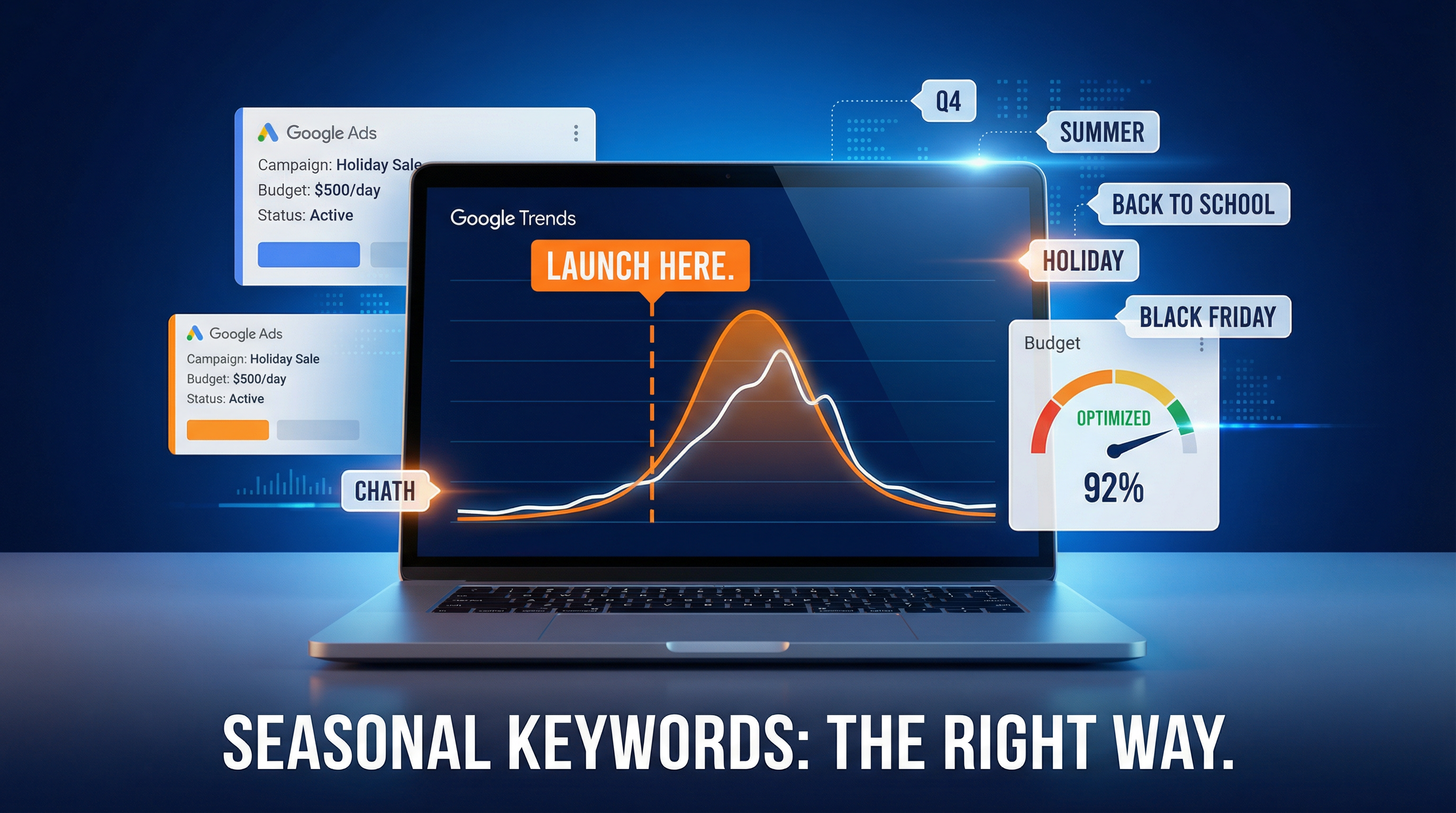
Here’s a scenario I see constantly: a business owner runs Google Ads, their peak season rolls around — Black Friday, Q4, back-to-school, summer — and they launch their campaign right when search volume hits its highest point.
Then they’re confused when CPCs are double what they budgeted and Return on Ad Spend (ROAS) is nowhere near the target.
It’s not bad luck. It’s a timing problem. And it’s completely fixable.
1. The Real Problem: Showing Up Late to the Auction
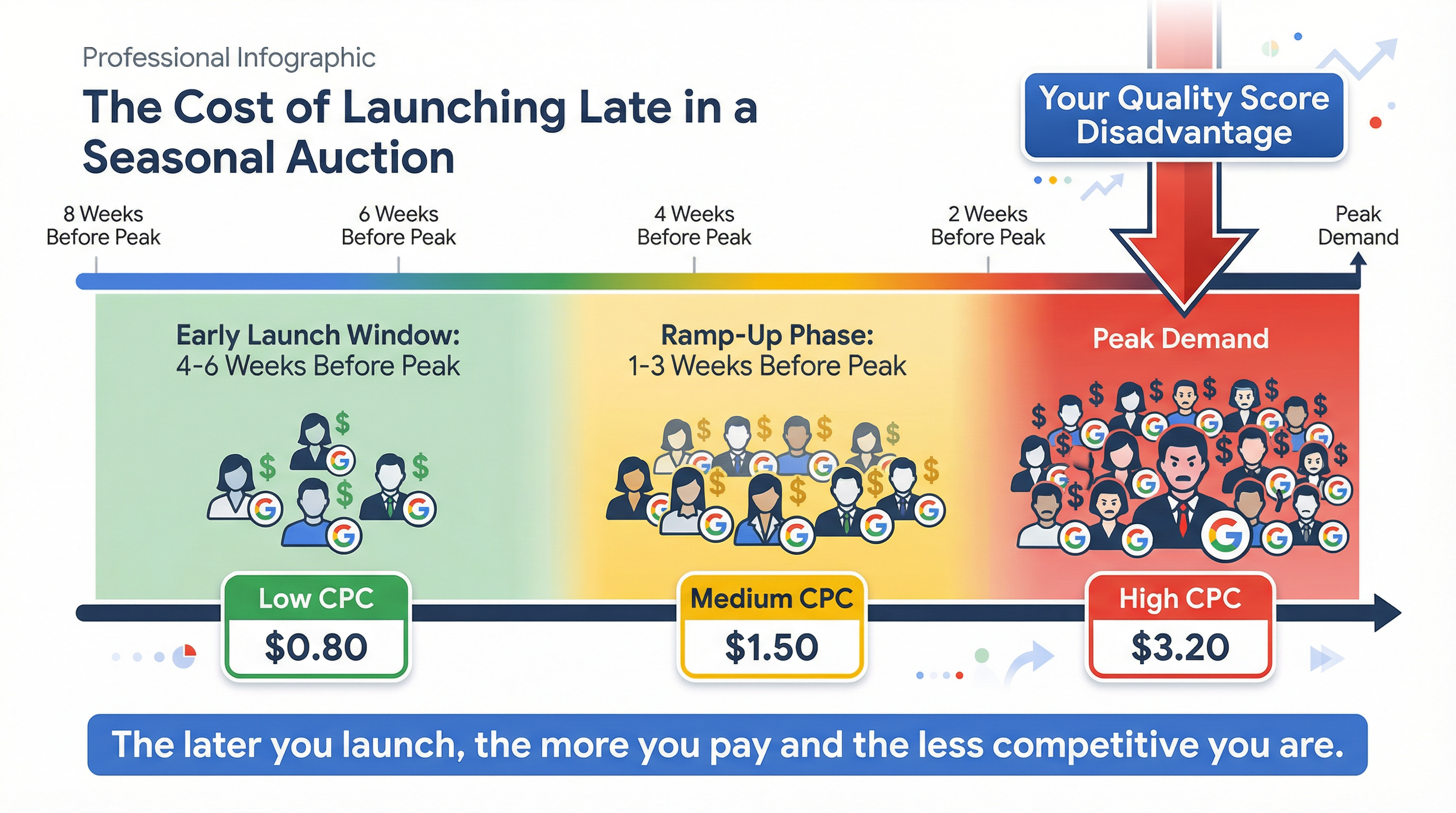
When you launch at peak demand, you’re entering an auction that every competitor has already been competing in. Google’s Smart Bidding algorithms have been learning from weeks of data. Your competitors’ Quality Scores are already high. And Cost-Per-Click (CPC) bids are at their most expensive because the pool of advertisers bidding is at its absolute largest.
You’re not competing for the same traffic. You’re bidding against advertisers who already have the advantage. The solution isn’t a bigger budget. It’s better timing.
The Cost of Procrastination
Consider what happens when you launch a Black Friday campaign on the Monday of Thanksgiving week. By this point, major retailers have been running their “Early Black Friday” deals since late October. Their campaigns have accumulated thousands of impressions, clicks, and conversions. Google’s algorithm knows exactly which users are most likely to convert for their specific ads.
When your new campaign enters the fray, it has zero historical data. To compensate for this lack of data and to get your ads to show, Google requires you to bid significantly higher. You are paying a premium just to participate in the auction, let alone win it.
Furthermore, user intent shifts as the peak approaches. Early searchers are often in the research phase, looking for ideas and comparing options. By the time the peak hits, they are ready to buy. If you miss the research phase, you miss the opportunity to build brand awareness and capture those users in your remarketing lists.
The Quality Score Disadvantage
Quality Score is a crucial metric in Google Ads, determined by your expected click-through rate (CTR), ad relevance, and landing page experience. Competitors who launched early have had time to test and refine their ads, improving their CTR. Their landing pages have been optimized based on early traffic.
Your new campaign starts with a baseline Quality Score, which is often lower than the optimized scores of your competitors. Because Ad Rank is calculated by multiplying your Max CPC bid by your Quality Score, a lower Quality Score means you must bid even higher to achieve the same position as a competitor with a better score.
2. Step 1: Use Google Trends to Find the Pattern
Before you touch Google Ads, open Google Trends and search your core keyword. Set the date range to the past 12 months (or even the past 5 years to see long-term consistency).
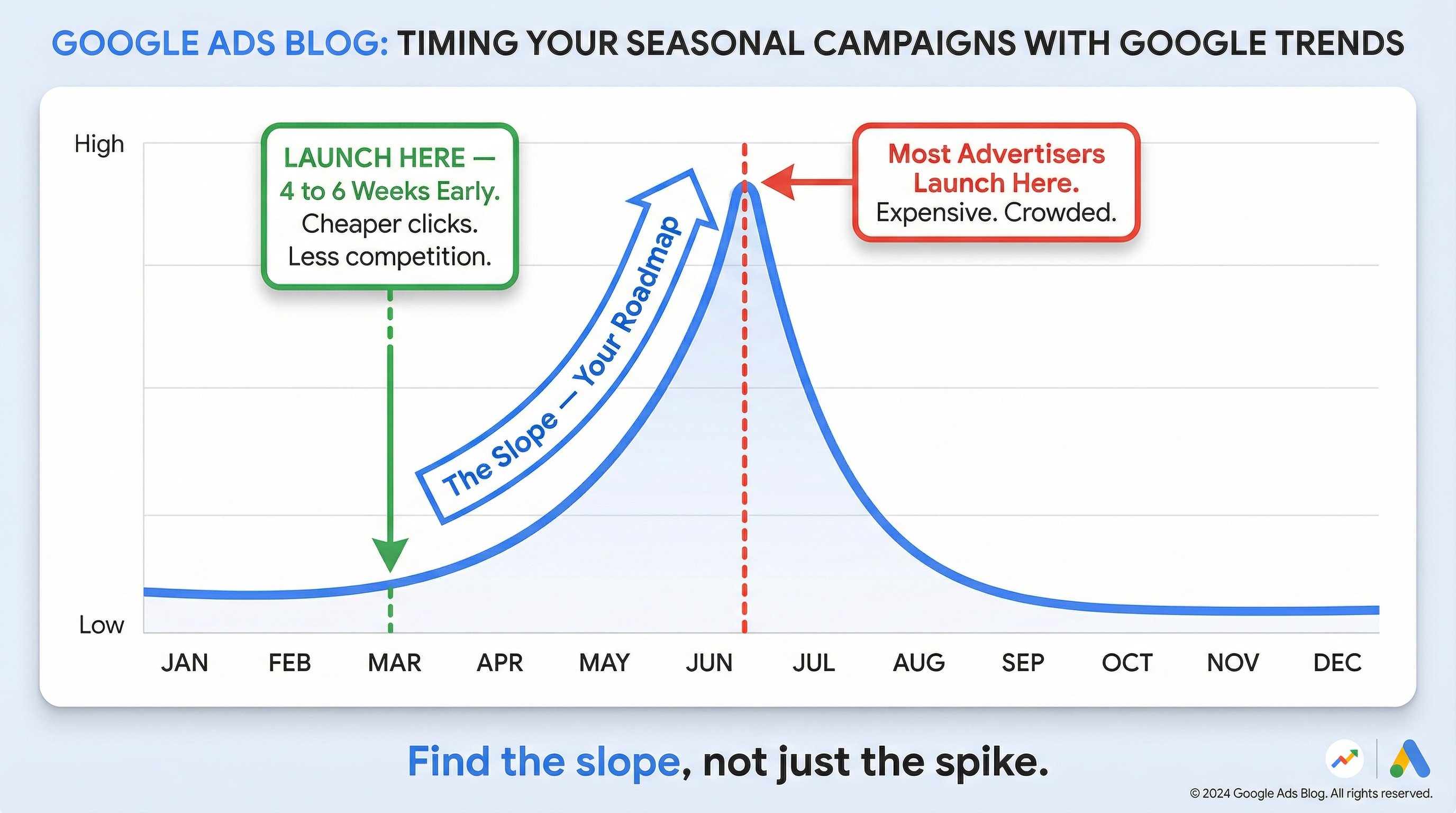
You’ll see the pattern almost immediately — a predictable rise and fall in search interest tied to your seasonal cycle. That pattern is your roadmap.
What you’re looking for isn’t the peak. You’re looking for when interest starts to climb — that’s your launch window. Most advertisers wait for the spike. Smart advertisers launch when the curve starts to angle upward.
Identifying the Upward Slope
Let’s say you sell outdoor patio furniture. A quick look at Google Trends will likely show search interest starting to rise in late March or early April, peaking in May or June, and then tapering off in August.
If you wait until May to launch your summer campaigns, you’ve missed the crucial window when people are planning their backyard setups. You want to launch when the line starts moving up from its winter baseline.
The 4-to-6 Week Rule
As a general rule: launch your seasonal campaigns 4 to 6 weeks before peak demand.
That’s the window where clicks are cheaper, competition is lighter, and you can build Quality Score and conversion history before the expensive window opens. This early phase allows you to:
- Gather Cheap Data: Clicks cost significantly less before the peak. You can use this cheaper traffic to test ad copy and landing pages.
- Train the Algorithm: If you are using Smart Bidding, this early period provides the algorithm with the conversion data it needs to optimize bids when the peak hits.
- Build Remarketing Audiences: Users researching early can be added to remarketing lists, allowing you to target them aggressively when they are ready to purchase later in the season.
3. Step 2: Never Mix Seasonal and Evergreen Campaigns
This is the structural mistake that kills seasonal performance more than anything else.
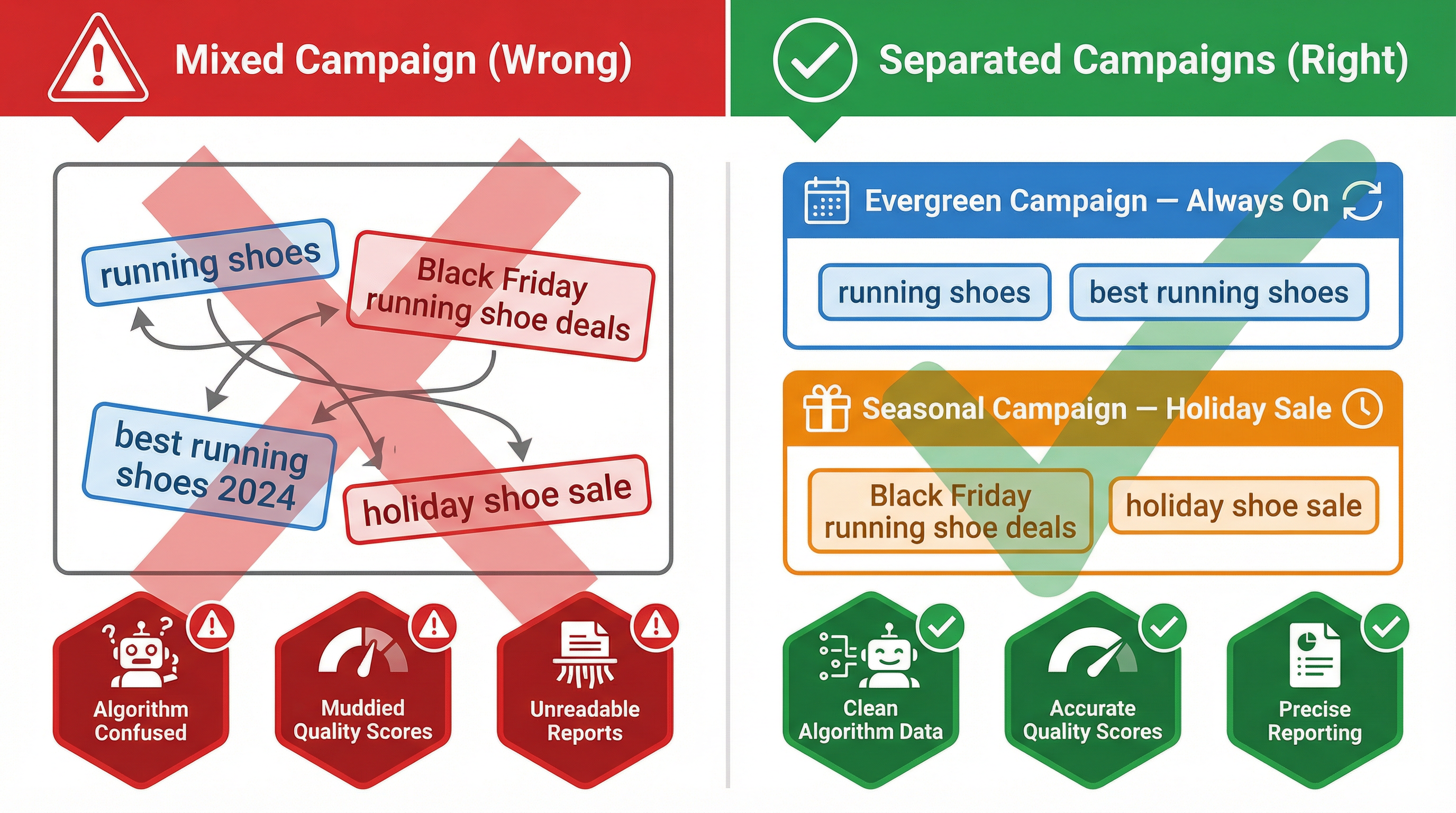
When you add seasonal keywords into your existing evergreen campaigns, you’re blending two fundamentally different types of intent, two different conversion windows, and two different bidding contexts into the same dataset.
The Algorithm Gets Confused
Your bidding algorithm relies on consistent patterns to predict future performance. Evergreen keywords (e.g., “running shoes”) have a relatively stable conversion rate year-round. Seasonal keywords (e.g., “Black Friday running shoe deals”) have a massive spike in conversion rate for a very short period.
If you put them in the same campaign, the algorithm tries to optimize for both simultaneously. It might see the sudden spike in seasonal conversions and start bidding aggressively on all keywords, including the evergreen ones, wasting budget. Or, it might average out the performance, underbidding on the seasonal keywords during their peak.
Muddied Quality Signals
Quality Score is calculated at the keyword level, but the overall historical performance of the campaign also plays a role. Mixing seasonal and evergreen keywords can muddy these signals. A seasonal ad that performs poorly because it was left running too long can drag down the historical performance of the entire campaign.
Unreadable Reporting
When seasonal and evergreen keywords share a campaign, it becomes incredibly difficult to analyze performance. You can’t easily isolate the impact of your seasonal push. Did your overall ROAS improve because of the seasonal sale, or did your evergreen campaigns suddenly perform better? You need clean data to make informed decisions.
The fix is simple: create a dedicated seasonal campaign. New campaign. New budget. New ad copy that reflects the seasonal context. New landing page that matches the seasonal offer. Keep it completely separate from your evergreen structure.
This keeps your data clean, your bidding signals accurate, and your Quality Scores optimized for the right intent.
4. Structuring Your Dedicated Seasonal Campaign
Creating a separate campaign is the first step, but how you structure that campaign determines its success. A well-structured seasonal campaign allows for precise budget control and targeted messaging.
Single Theme Ad Groups (STAGs)
Organize your seasonal campaign using Single Theme Ad Groups (STAGs). Group keywords based on a specific theme or intent. For a “Back to School” campaign, you might have ad groups for:
- Backpacks and bags
- Laptops and electronics
- School supplies and stationery
- Dorm room essentials
This structure ensures that the ad copy is highly relevant to the user’s search query, improving CTR and Quality Score.
Tailored Ad Copy
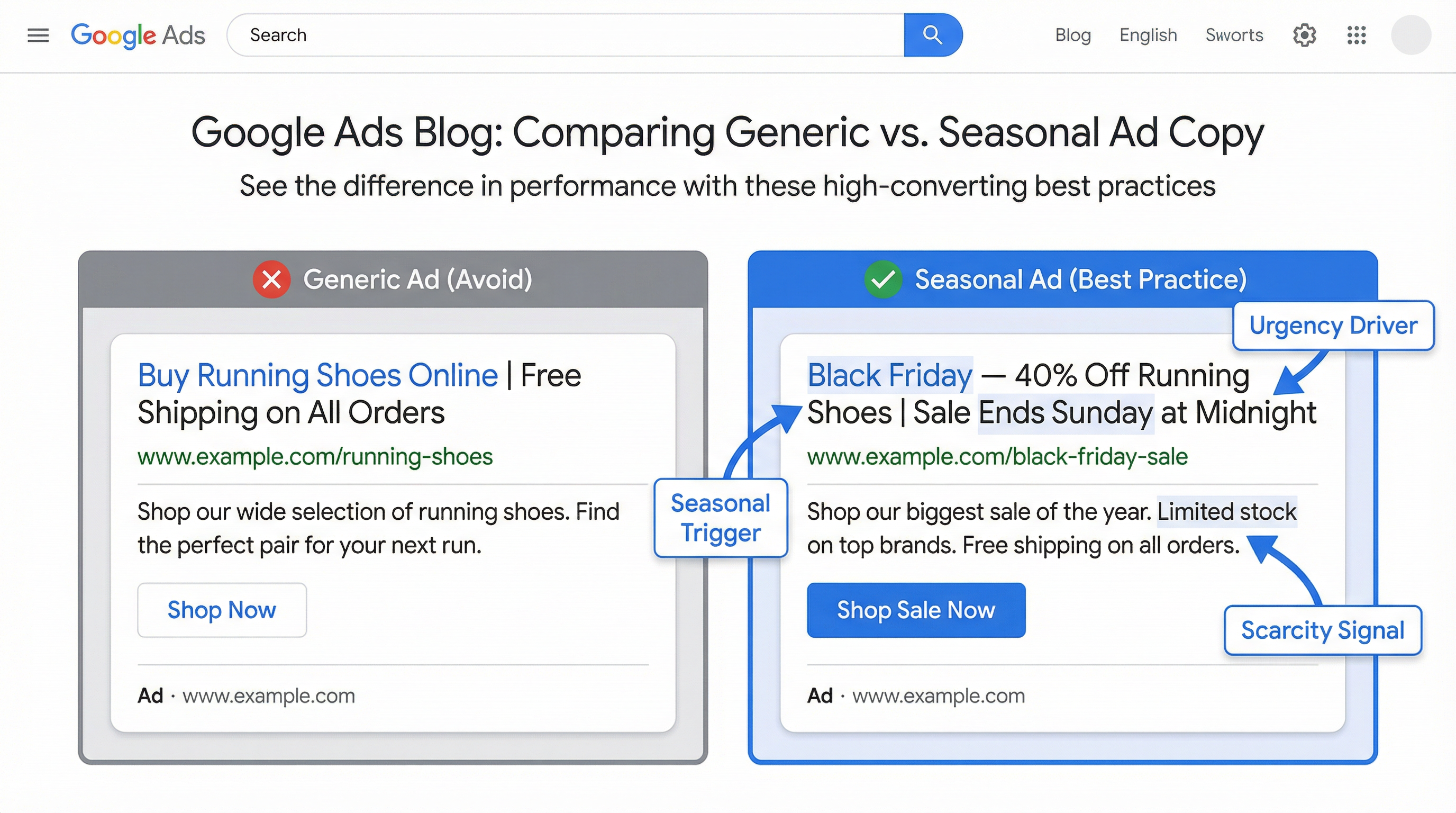
Your ad copy must clearly communicate the seasonal offer. Don’t just reuse your evergreen ads.
- Highlight the Urgency: Use phrases like “Limited Time Offer,” “Sale Ends Soon,” or “Black Friday Exclusive.”
- Include the Year: Adding the current year (e.g., “Best Summer Deals 2024”) increases relevance and CTR.
- Utilize Countdowns: Google Ads offers a countdown feature that dynamically updates the time remaining in your sale within the ad text. This is a powerful tool for driving urgency.
Dedicated Landing Pages
Never send seasonal traffic to your generic homepage. Create a dedicated landing page that matches the promise made in the ad.
If your ad promotes a “30% off Mother’s Day Sale,” the landing page must prominently display that offer and feature the relevant products. A seamless transition from ad to landing page is critical for conversion.
5. Bidding Strategies for the Seasonal Rush
Choosing the right bidding strategy for a short-term seasonal campaign requires a different approach than long-term evergreen campaigns.
The Role of Manual CPC
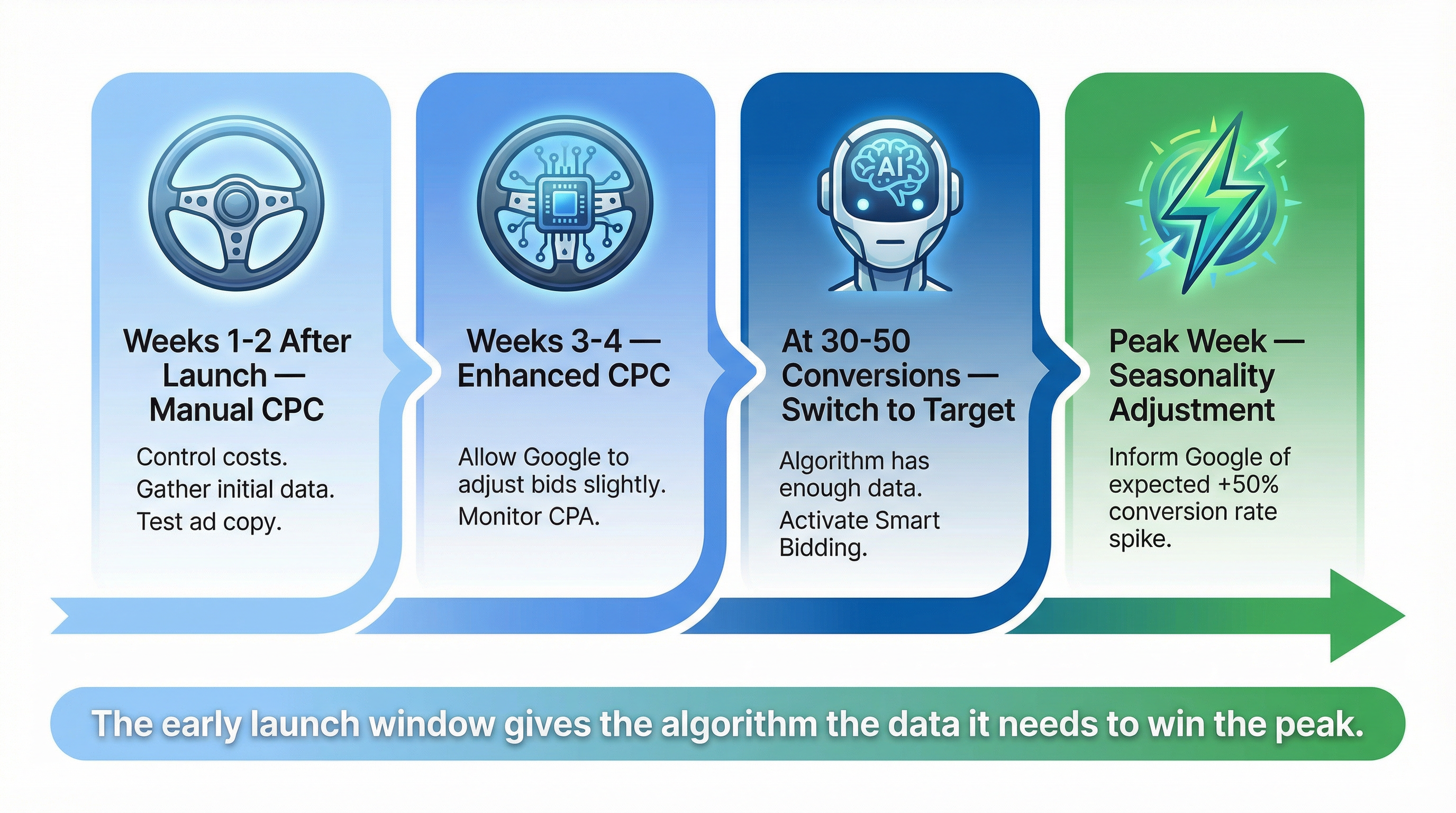
As discussed in our previous guides, Manual CPC (or Enhanced CPC) can be highly effective for new campaigns with zero data. When you launch your seasonal campaign 4-6 weeks early, starting with Manual CPC allows you to control costs while gathering initial traffic and conversions.
You can set bids based on your historical knowledge of keyword value, ensuring you don’t overspend during the research phase.
Transitioning to Smart Bidding
Once your seasonal campaign has accumulated enough data (typically 30-50 conversions within a 30-day period), you can consider transitioning to a Smart Bidding strategy like Target CPA or Target ROAS.
The early launch window provides the algorithm with the necessary data to understand which users are converting. When the peak hits, the algorithm can then leverage this data to bid aggressively and efficiently.
Seasonality Adjustments
Google Ads offers an advanced feature called “Seasonality Adjustments.” This tool is designed specifically for short-term events (typically 1-7 days) where you expect a significant change in conversion rates, such as a flash sale or Black Friday.
You inform Google of the expected increase in conversion rate (e.g., +50%), and the Smart Bidding algorithm will temporarily adjust its behavior to capitalize on the spike. Once the event ends, the algorithm reverts to its normal behavior without needing to relearn.
Note: Use Seasonality Adjustments carefully. Only use them for short, predictable events, not for extended seasonal periods (like a 3-month summer season).
6. Step 3: Clean Up After the Season Ends
This step is the one almost nobody does — and it’s where budget quietly bleeds after the peak.
Once seasonal demand drops, the search intent behind those keywords changes. Someone searching “Christmas gift ideas” in January isn’t buying. They’re browsing, returning, or just lost. Those clicks cost money and don’t convert.
The Post-Season Bleed
Many advertisers simply let their seasonal campaigns run until the budget runs out, or they forget to pause them altogether. This results in “post-season bleed,” where you continue to pay for clicks from users who have missed the buying window.
These clicks often have a very low conversion rate, driving up your overall CPA and dragging down the historical performance of your account.
Immediate Pausing
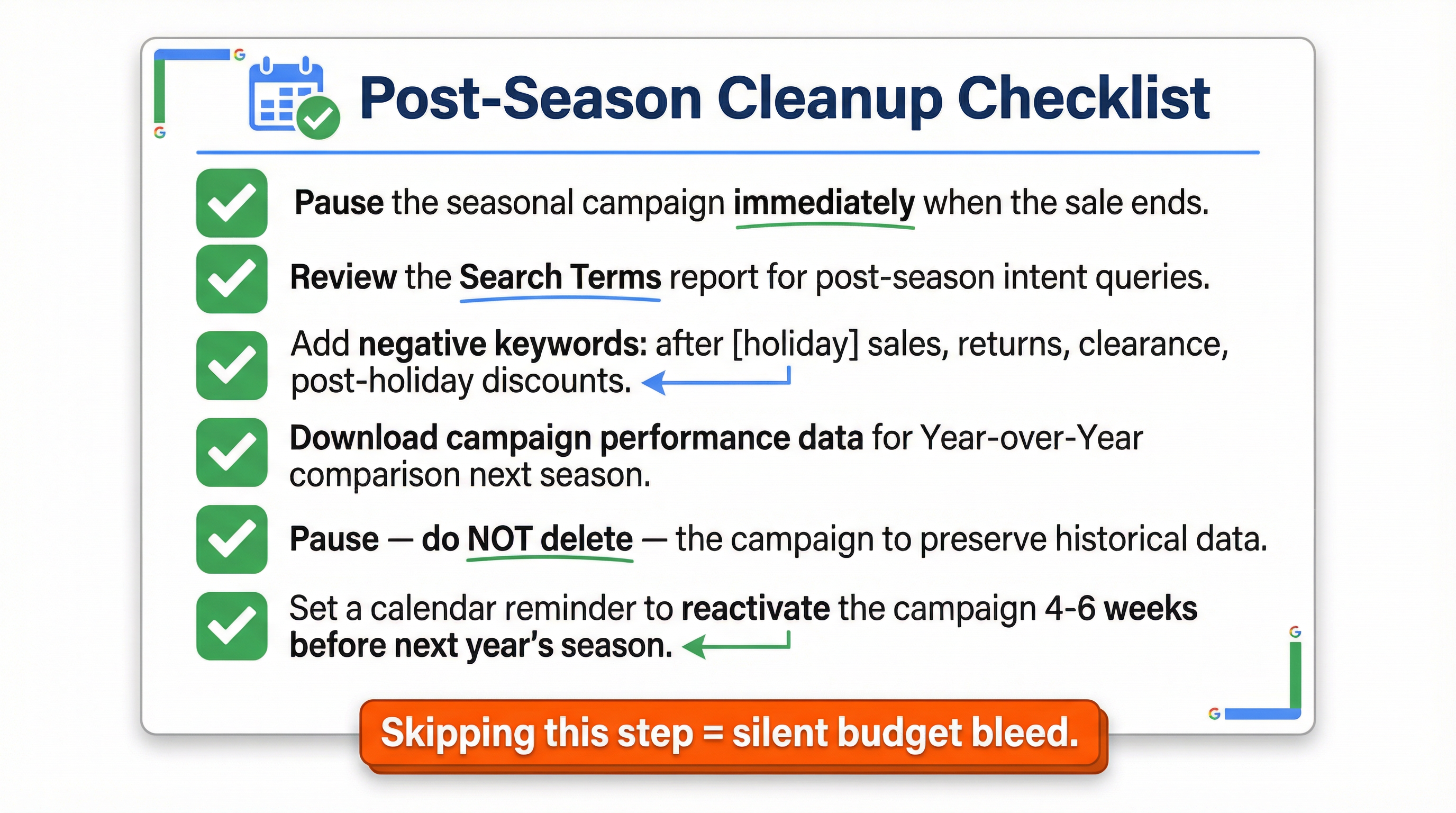
The most critical action is to pause the seasonal campaign immediately after the relevant period ends. If your sale ends on Cyber Monday at 11:59 PM, the campaign should be paused at midnight. Do not let it run into Tuesday.
Post-Season Negative Keywords
Even after pausing the dedicated campaign, seasonal search terms can sometimes bleed into your evergreen campaigns through broad or phrase match keywords.
To prevent this, go through your search terms report and identify post-season intent. Add these as negative keywords to your evergreen campaigns. Examples include:
- “after [Holiday] sales”
- “returns”
- “clearance”
- “did not arrive in time”
- “post-holiday discounts”
This proactive cleanup ensures that your evergreen campaigns remain focused on high-intent, year-round traffic.
7. Advanced Tactic: The “Always On” Seasonal Approach
For businesses with multiple distinct seasons (e.g., a clothing retailer with Spring, Summer, Fall, and Winter collections), an “always on” approach to seasonal management can be highly effective.
The Campaign Rotation System
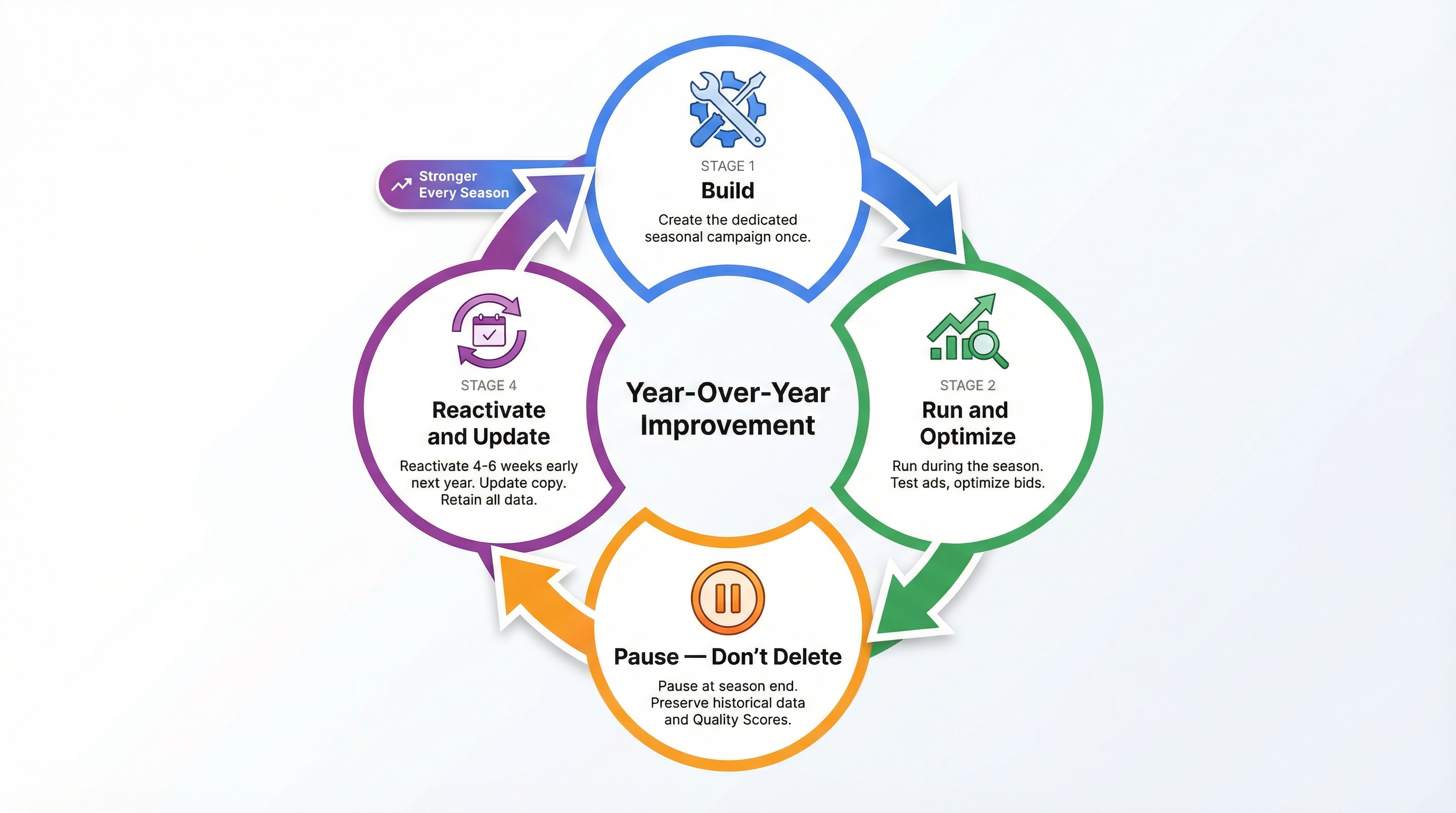
Instead of building new campaigns from scratch every year, you maintain a library of seasonal campaigns.
- Build Once: Create the dedicated seasonal campaign (e.g., “Summer Collection”).
- Run and Optimize: Run the campaign during the season, optimizing as usual.
- Pause, Don’t Delete: When the season ends, pause the campaign. Do not delete it.
- Reactivate and Update: The following year, reactivate the campaign 4-6 weeks early. Update the ad copy with the new year and any new offers, but retain the historical data and Quality Scores from the previous year.
The Benefit of Historical Data
Google’s algorithms favor campaigns with historical data. By reactivating a paused campaign rather than creating a new one, you start with a significant advantage. The campaign already has a baseline Quality Score and conversion history, allowing it to perform better right out of the gate.
This rotation system saves time on campaign creation and leverages the power of historical data for improved performance year over year.
8. Analyzing Seasonal Performance: Beyond the Basics
Evaluating the success of a seasonal campaign requires looking beyond the standard metrics. A short-term spike in sales is great, but understanding the long-term impact is crucial for refining your strategy.
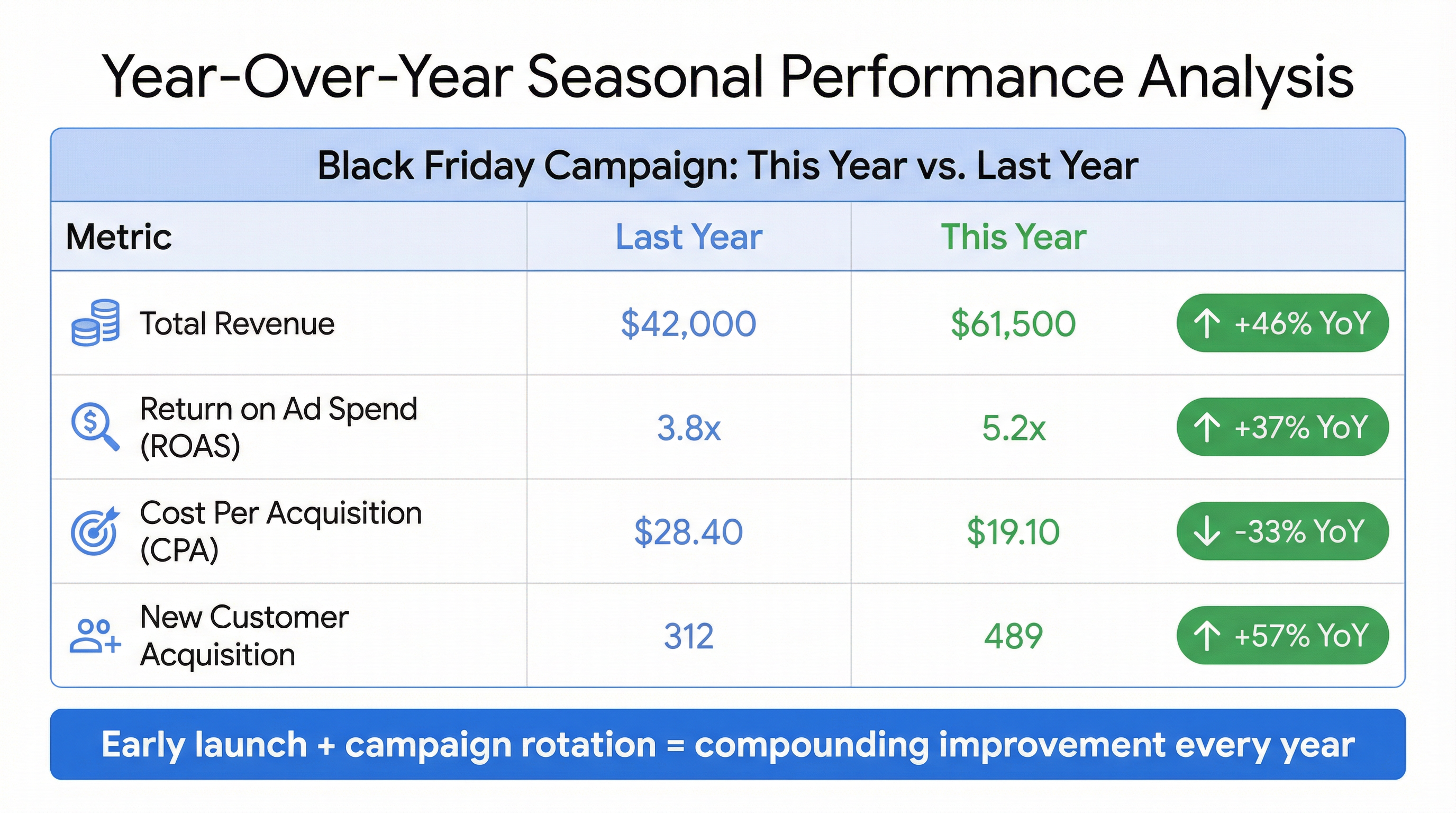
Year-Over-Year (YoY) Comparison
The most accurate way to measure seasonal success is a Year-Over-Year (YoY) comparison. Compare the performance of this year’s Black Friday campaign to last year’s Black Friday campaign, not to the month of October.
Look at metrics like:
- Total Revenue
- Return on Ad Spend (ROAS)
- Cost Per Acquisition (CPA)
- New Customer Acquisition
The Halo Effect
Seasonal campaigns often have a “halo effect” on your evergreen campaigns. The increased brand awareness generated during the seasonal push can lead to higher search volume for your brand terms and improved conversion rates across the board.
When analyzing performance, look at the overall account health during and immediately after the seasonal period, not just the isolated performance of the seasonal campaign.
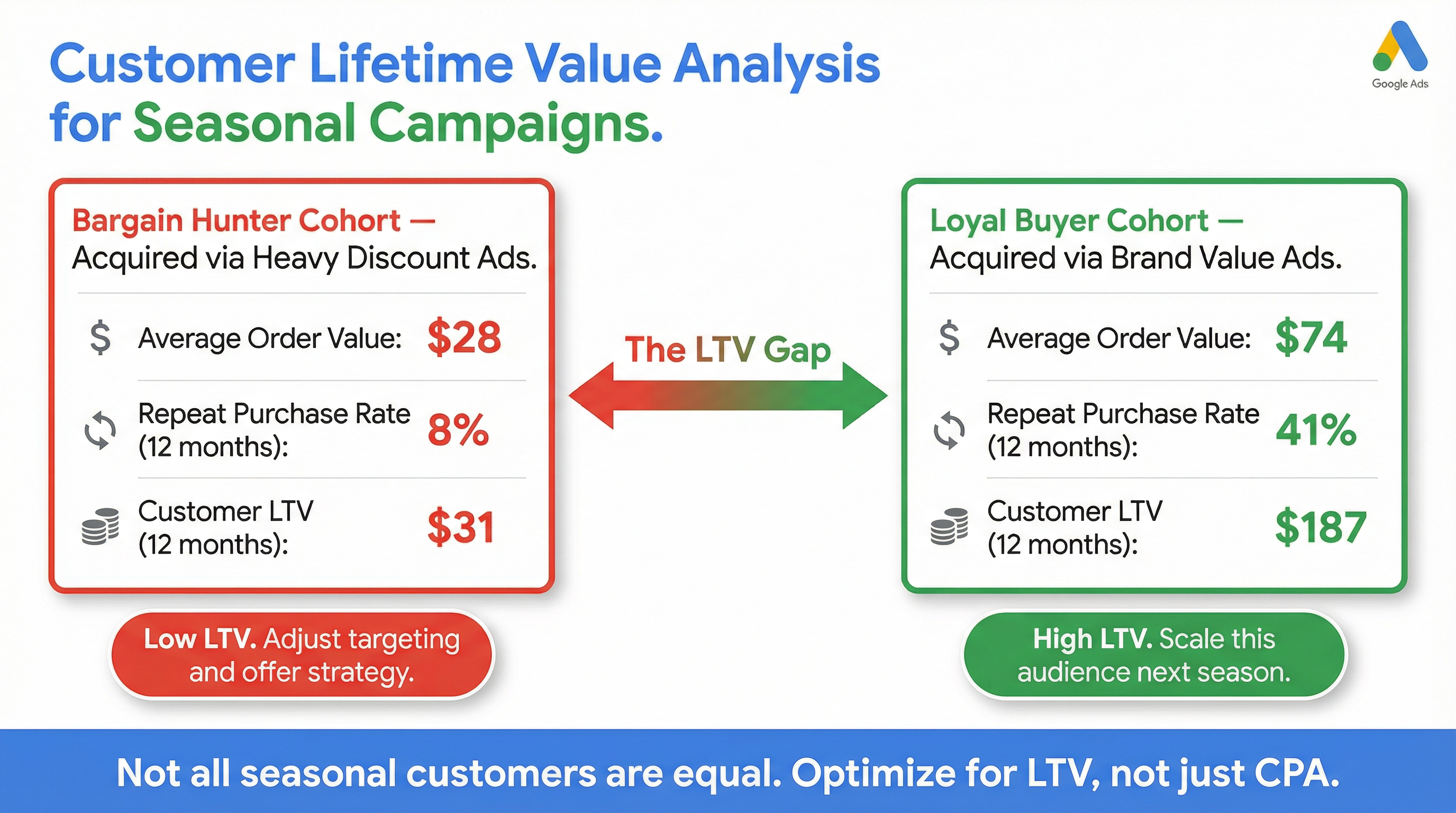
Customer Lifetime Value (LTV)
Did your seasonal campaign attract high-value customers, or just bargain hunters who will never buy again?
Track the cohort of customers acquired during the seasonal push over the next 6-12 months. Calculate their Customer Lifetime Value (LTV). If the LTV is low, you may need to adjust your targeting or offers for the next season to attract more loyal customers.
9. Seasonal Performance Is a System
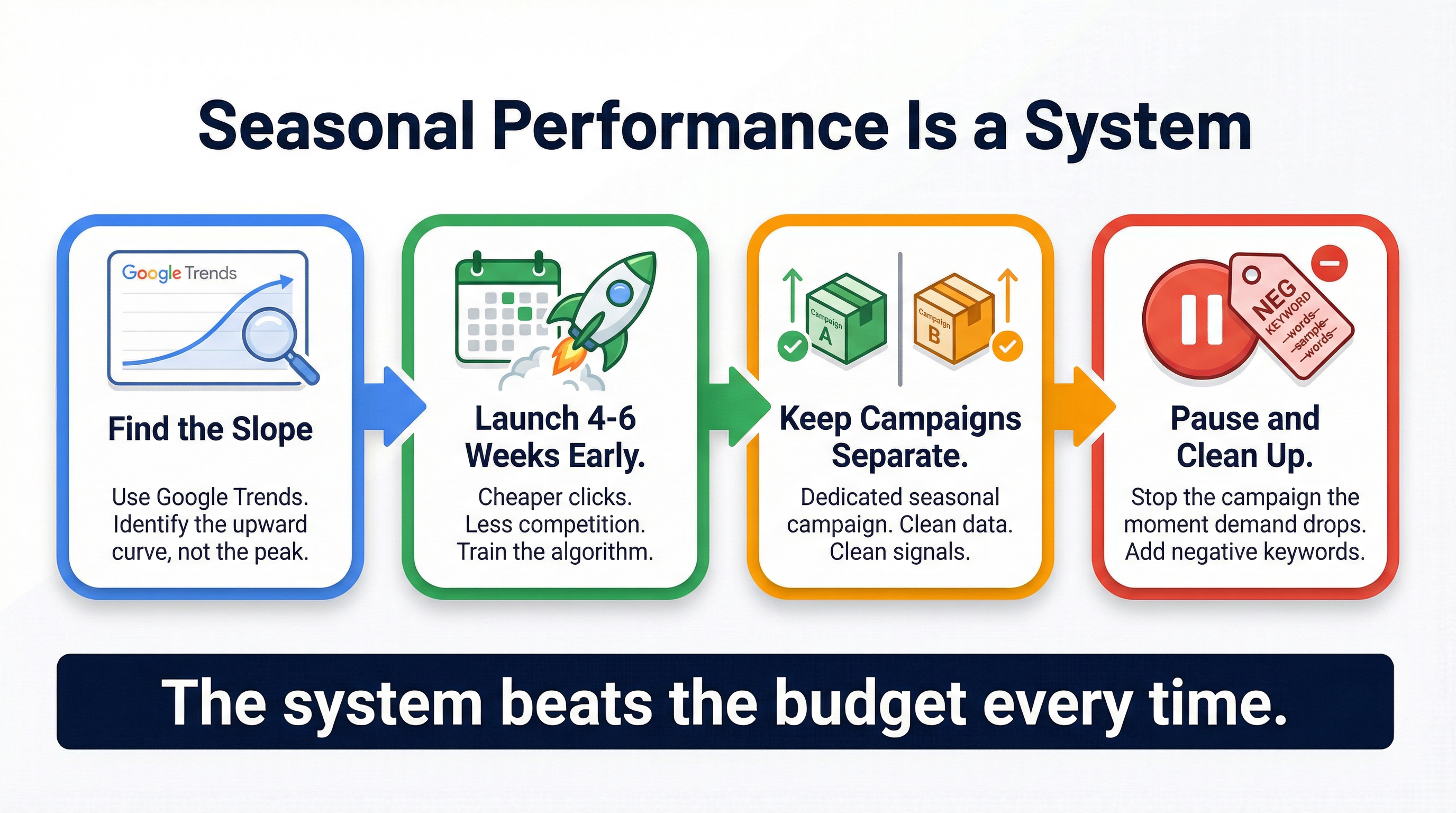
The advertisers who consistently win seasonal traffic aren’t spending more. They’re timing it better, structuring it better, and cleaning it up better.
Use Google Trends to find the slope, not just the spike. Launch 4–6 weeks early. Keep seasonal campaigns completely separate. Pause and add negatives the moment demand drops.
That’s the system. It requires planning, discipline, and a willingness to execute the unglamorous tasks like post-season cleanup. But the reward is a significant competitive advantage and a dramatically improved return on your seasonal ad spend.
Ready to put this into action for your own account?
I offer professional Google Ads management services on Upwork. I can help you implement this exact seasonal system, structure your campaigns for maximum efficiency, and ensure you’re not wasting budget on poor timing or messy account architecture.
10. Deep Dive: Expanding on the Seasonal Strategy
To truly master seasonal keywords, we need to delve deeper into the nuances of implementation and continuous optimization. The foundational steps—timing, separation, and cleanup—are critical, but the execution details separate the good campaigns from the great ones.
Granular Audience Targeting During the Peak
During the peak of a season, the volume of searches increases, but so does the noise. Not everyone searching for “winter coats” is ready to buy; some are just browsing styles. To maximize ROAS, you must layer granular audience targeting over your seasonal keywords.
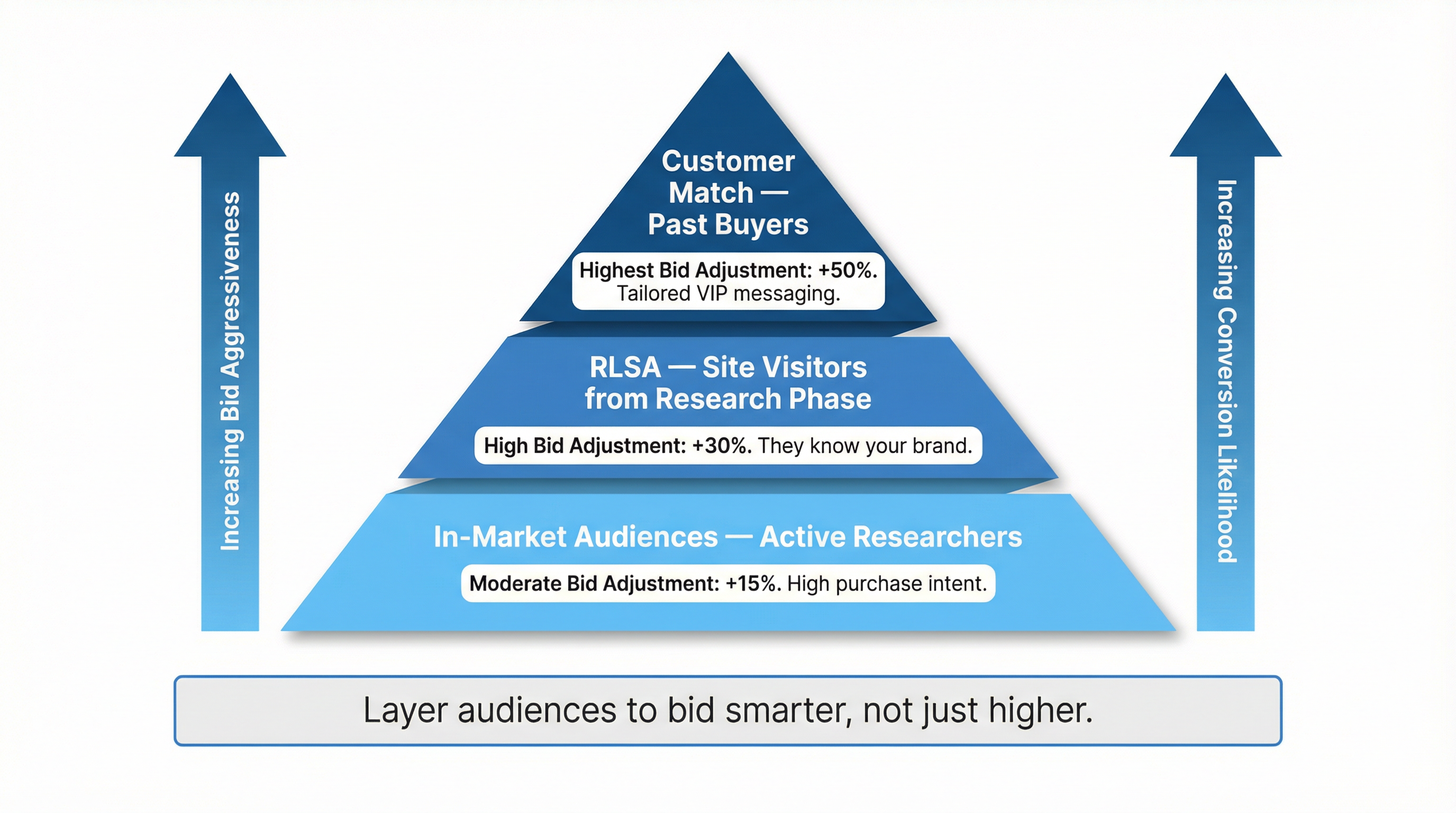
- In-Market Audiences: Google’s In-Market audiences allow you to target users who are actively researching and considering purchasing products similar to yours. Layering these audiences onto your seasonal campaigns with a positive bid adjustment ensures you are bidding more aggressively for users with higher intent.
- Remarketing Lists for Search Ads (RLSA): This is perhaps the most powerful tool during a seasonal rush. Users who visited your site during the 4-6 week “research phase” (Step 1) should be placed in specific remarketing lists. When they return to search during the peak, you can increase your bids significantly to ensure your ad appears at the top of the page. They already know your brand, making them highly likely to convert.
- Customer Match: Upload your existing customer email lists. Past customers are often your best prospects during seasonal sales. Create a dedicated ad group or campaign targeting these users with tailored messaging (e.g., “Exclusive VIP Holiday Access”).
Dynamic Search Ads (DSA) as a Safety Net
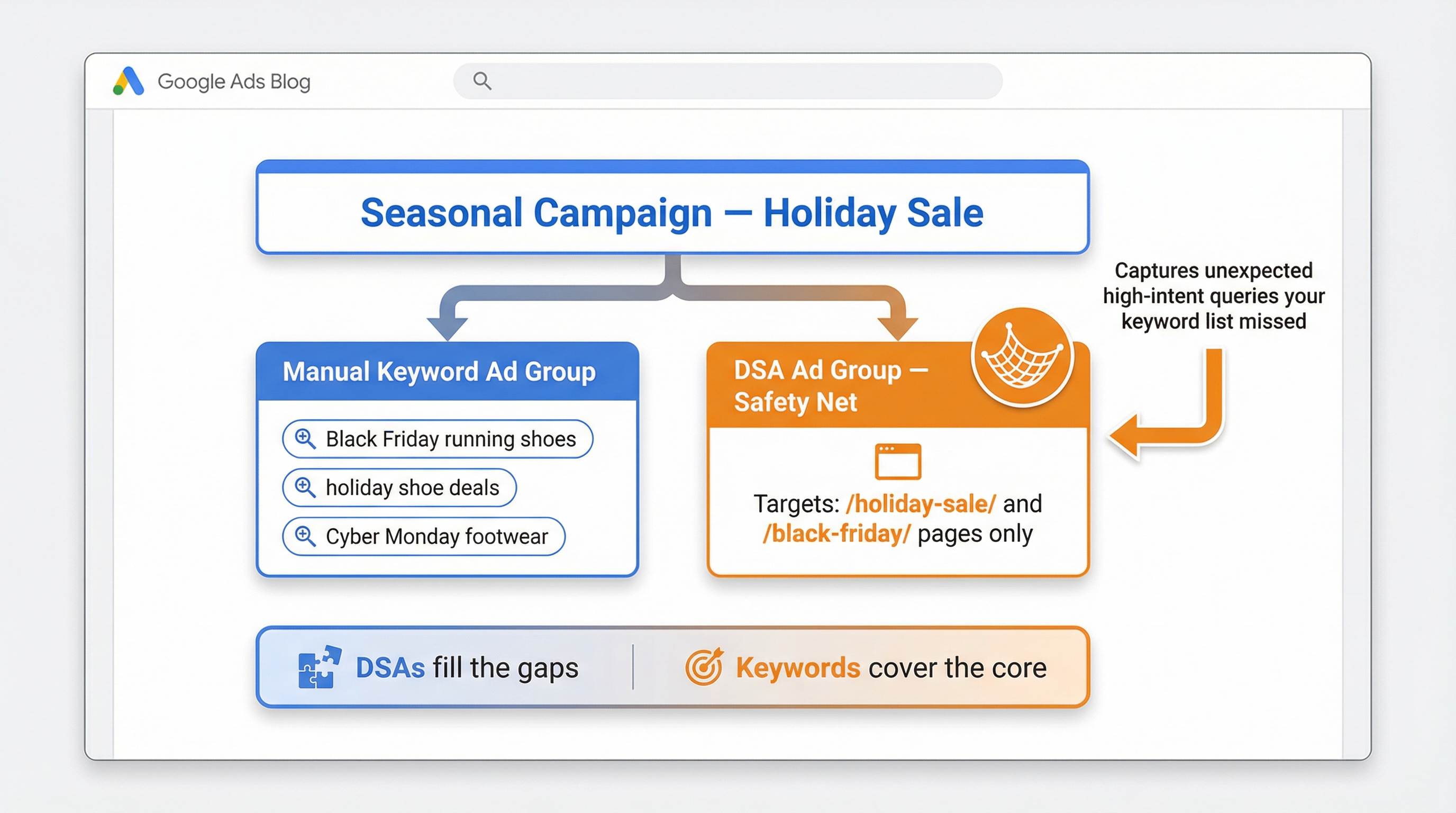
While you should build comprehensive keyword lists for your seasonal campaigns, it is impossible to predict every search query. User behavior changes rapidly during seasonal events.
Dynamic Search Ads (DSA) can act as a safety net. DSAs use your website content to automatically generate ads and target relevant search queries that your keyword lists might have missed.
Create a DSA ad group within your seasonal campaign and target only the specific URLs related to your seasonal offers. This ensures that the DSAs remain relevant to the season and capture any unexpected, high-converting long-tail queries.
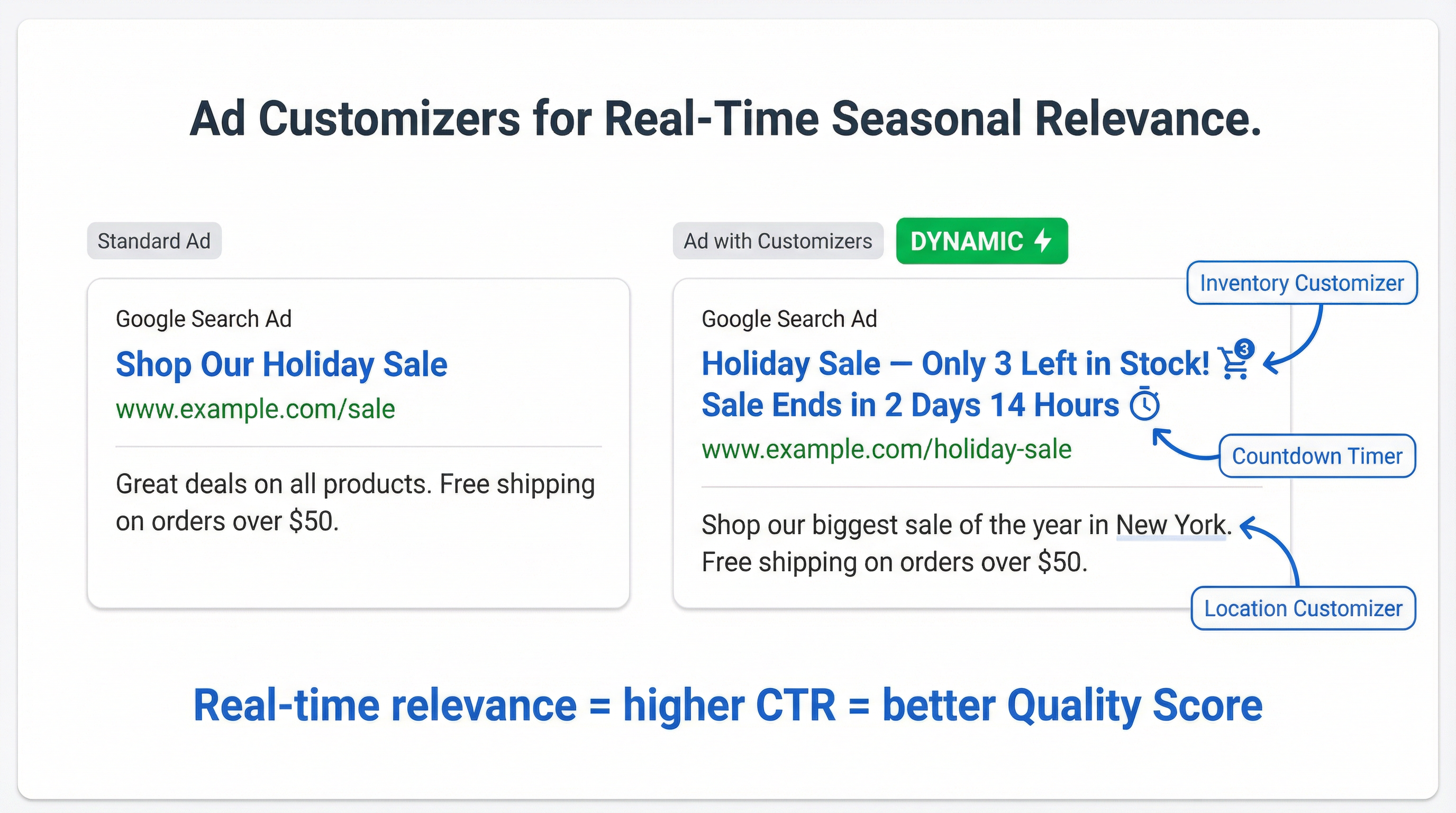
Ad Customizers for Real-Time Relevance
Ad customizers allow you to dynamically update your ad text based on the user’s search query, device, location, or even the time of day. During a fast-paced seasonal event, this real-time relevance is invaluable.
- Inventory Countdowns: If you are running a clearance sale, use customizers to show the remaining inventory (e.g., “Only 5 left in stock!”). This creates immense urgency.
- Location-Specific Offers: If you have physical stores, use location customizers to highlight local promotions or store hours during the holiday season.
The Importance of Impression Share Monitoring
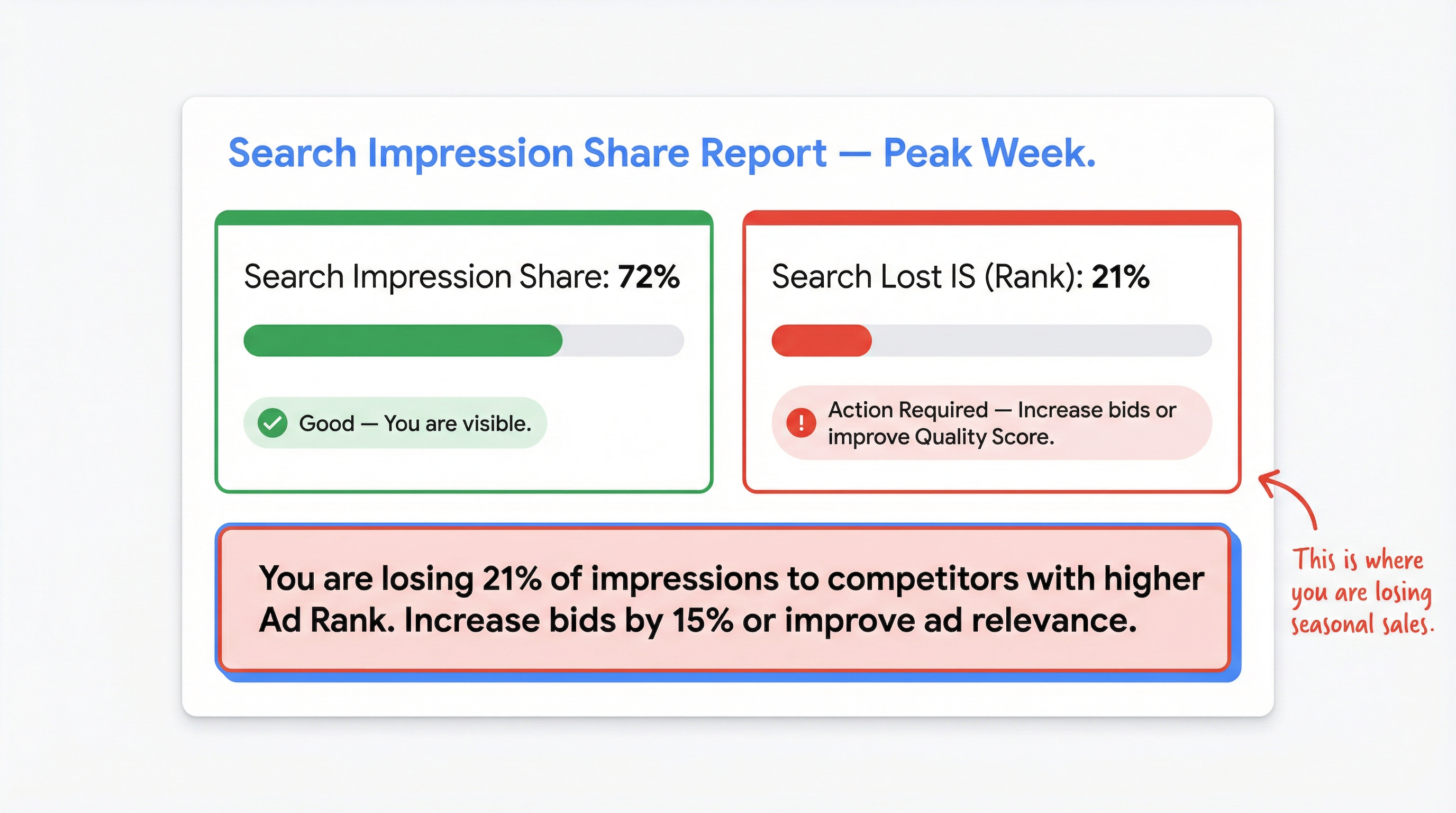
During the peak season, your primary metric for visibility is Search Impression Share (IS). If your IS is low, you are losing potential sales to competitors.
Monitor your Search IS and Search Lost IS (Rank) daily. If you are losing significant impression share due to rank, you need to either increase your bids (if your ROAS allows) or improve your ad relevance and Quality Score. If you are losing impression share due to budget, and the campaign is profitable, you must increase the budget immediately to capture the remaining demand.
The seasonal window is short; you cannot afford to be limited by budget when the traffic is highly profitable.
11. Deep Dive: Expanding on the Seasonal Strategy
To truly master seasonal keywords, we need to delve deeper into the nuances of implementation and continuous optimization. The foundational steps—timing, separation, and cleanup—are critical, but the execution details separate the good campaigns from the great ones.
Granular Audience Targeting During the Peak
During the peak of a season, the volume of searches increases, but so does the noise. Not everyone searching for “winter coats” is ready to buy; some are just browsing styles. To maximize ROAS, you must layer granular audience targeting over your seasonal keywords.
- In-Market Audiences: Google’s In-Market audiences allow you to target users who are actively researching and considering purchasing products similar to yours. Layering these audiences onto your seasonal campaigns with a positive bid adjustment ensures you are bidding more aggressively for users with higher intent.
- Remarketing Lists for Search Ads (RLSA): This is perhaps the most powerful tool during a seasonal rush. Users who visited your site during the 4-6 week “research phase” (Step 1) should be placed in specific remarketing lists. When they return to search during the peak, you can increase your bids significantly to ensure your ad appears at the top of the page. They already know your brand, making them highly likely to convert.
- Customer Match: Upload your existing customer email lists. Past customers are often your best prospects during seasonal sales. Create a dedicated ad group or campaign targeting these users with tailored messaging (e.g., “Exclusive VIP Holiday Access”).
Dynamic Search Ads (DSA) as a Safety Net
While you should build comprehensive keyword lists for your seasonal campaigns, it is impossible to predict every search query. User behavior changes rapidly during seasonal events.
Dynamic Search Ads (DSA) can act as a safety net. DSAs use your website content to automatically generate ads and target relevant search queries that your keyword lists might have missed.
Create a DSA ad group within your seasonal campaign and target only the specific URLs related to your seasonal offers. This ensures that the DSAs remain relevant to the season and capture any unexpected, high-converting long-tail queries.
Ad Customizers for Real-Time Relevance
Ad customizers allow you to dynamically update your ad text based on the user’s search query, device, location, or even the time of day. During a fast-paced seasonal event, this real-time relevance is invaluable.
- Inventory Countdowns: If you are running a clearance sale, use customizers to show the remaining inventory (e.g., “Only 5 left in stock!”). This creates immense urgency.
- Location-Specific Offers: If you have physical stores, use location customizers to highlight local promotions or store hours during the holiday season.
The Importance of Impression Share Monitoring
During the peak season, your primary metric for visibility is Search Impression Share (IS). If your IS is low, you are losing potential sales to competitors.
Monitor your Search IS and Search Lost IS (Rank) daily. If you are losing significant impression share due to rank, you need to either increase your bids (if your ROAS allows) or improve your ad relevance and Quality Score. If you are losing impression share due to budget, and the campaign is profitable, you must increase the budget immediately to capture the remaining demand.
The seasonal window is short; you cannot afford to be limited by budget when the traffic is highly profitable.
12. Deep Dive: Expanding on the Seasonal Strategy
To truly master seasonal keywords, we need to delve deeper into the nuances of implementation and continuous optimization. The foundational steps—timing, separation, and cleanup—are critical, but the execution details separate the good campaigns from the great ones.
Granular Audience Targeting During the Peak
During the peak of a season, the volume of searches increases, but so does the noise. Not everyone searching for “winter coats” is ready to buy; some are just browsing styles. To maximize ROAS, you must layer granular audience targeting over your seasonal keywords.
- In-Market Audiences: Google’s In-Market audiences allow you to target users who are actively researching and considering purchasing products similar to yours. Layering these audiences onto your seasonal campaigns with a positive bid adjustment ensures you are bidding more aggressively for users with higher intent.
- Remarketing Lists for Search Ads (RLSA): This is perhaps the most powerful tool during a seasonal rush. Users who visited your site during the 4-6 week “research phase” (Step 1) should be placed in specific remarketing lists. When they return to search during the peak, you can increase your bids significantly to ensure your ad appears at the top of the page. They already know your brand, making them highly likely to convert.
- Customer Match: Upload your existing customer email lists. Past customers are often your best prospects during seasonal sales. Create a dedicated ad group or campaign targeting these users with tailored messaging (e.g., “Exclusive VIP Holiday Access”).
Dynamic Search Ads (DSA) as a Safety Net
While you should build comprehensive keyword lists for your seasonal campaigns, it is impossible to predict every search query. User behavior changes rapidly during seasonal events.
Dynamic Search Ads (DSA) can act as a safety net. DSAs use your website content to automatically generate ads and target relevant search queries that your keyword lists might have missed.
Create a DSA ad group within your seasonal campaign and target only the specific URLs related to your seasonal offers. This ensures that the DSAs remain relevant to the season and capture any unexpected, high-converting long-tail queries.
Ad Customizers for Real-Time Relevance
Ad customizers allow you to dynamically update your ad text based on the user’s search query, device, location, or even the time of day. During a fast-paced seasonal event, this real-time relevance is invaluable.
- Inventory Countdowns: If you are running a clearance sale, use customizers to show the remaining inventory (e.g., “Only 5 left in stock!”). This creates immense urgency.
- Location-Specific Offers: If you have physical stores, use location customizers to highlight local promotions or store hours during the holiday season.
The Importance of Impression Share Monitoring
During the peak season, your primary metric for visibility is Search Impression Share (IS). If your IS is low, you are losing potential sales to competitors.
Monitor your Search IS and Search Lost IS (Rank) daily. If you are losing significant impression share due to rank, you need to either increase your bids (if your ROAS allows) or improve your ad relevance and Quality Score. If you are losing impression share due to budget, and the campaign is profitable, you must increase the budget immediately to capture the remaining demand.
The seasonal window is short; you cannot afford to be limited by budget when the traffic is highly profitable.
13. Deep Dive: Expanding on the Seasonal Strategy
To truly master seasonal keywords, we need to delve deeper into the nuances of implementation and continuous optimization. The foundational steps—timing, separation, and cleanup—are critical, but the execution details separate the good campaigns from the great ones.
Granular Audience Targeting During the Peak
During the peak of a season, the volume of searches increases, but so does the noise. Not everyone searching for “winter coats” is ready to buy; some are just browsing styles. To maximize ROAS, you must layer granular audience targeting over your seasonal keywords.
- In-Market Audiences: Google’s In-Market audiences allow you to target users who are actively researching and considering purchasing products similar to yours. Layering these audiences onto your seasonal campaigns with a positive bid adjustment ensures you are bidding more aggressively for users with higher intent.
- Remarketing Lists for Search Ads (RLSA): This is perhaps the most powerful tool during a seasonal rush. Users who visited your site during the 4-6 week “research phase” (Step 1) should be placed in specific remarketing lists. When they return to search during the peak, you can increase your bids significantly to ensure your ad appears at the top of the page. They already know your brand, making them highly likely to convert.
- Customer Match: Upload your existing customer email lists. Past customers are often your best prospects during seasonal sales. Create a dedicated ad group or campaign targeting these users with tailored messaging (e.g., “Exclusive VIP Holiday Access”).
Dynamic Search Ads (DSA) as a Safety Net
While you should build comprehensive keyword lists for your seasonal campaigns, it is impossible to predict every search query. User behavior changes rapidly during seasonal events.
Dynamic Search Ads (DSA) can act as a safety net. DSAs use your website content to automatically generate ads and target relevant search queries that your keyword lists might have missed.
Create a DSA ad group within your seasonal campaign and target only the specific URLs related to your seasonal offers. This ensures that the DSAs remain relevant to the season and capture any unexpected, high-converting long-tail queries.
Ad Customizers for Real-Time Relevance
Ad customizers allow you to dynamically update your ad text based on the user’s search query, device, location, or even the time of day. During a fast-paced seasonal event, this real-time relevance is invaluable.
- Inventory Countdowns: If you are running a clearance sale, use customizers to show the remaining inventory (e.g., “Only 5 left in stock!”). This creates immense urgency.
- Location-Specific Offers: If you have physical stores, use location customizers to highlight local promotions or store hours during the holiday season.
The Importance of Impression Share Monitoring
During the peak season, your primary metric for visibility is Search Impression Share (IS). If your IS is low, you are losing potential sales to competitors.
Monitor your Search IS and Search Lost IS (Rank) daily. If you are losing significant impression share due to rank, you need to either increase your bids (if your ROAS allows) or improve your ad relevance and Quality Score. If you are losing impression share due to budget, and the campaign is profitable, you must increase the budget immediately to capture the remaining demand.
The seasonal window is short; you cannot afford to be limited by budget when the traffic is highly profitable.
14. Deep Dive: Expanding on the Seasonal Strategy
To truly master seasonal keywords, we need to delve deeper into the nuances of implementation and continuous optimization. The foundational steps—timing, separation, and cleanup—are critical, but the execution details separate the good campaigns from the great ones.
Granular Audience Targeting During the Peak
During the peak of a season, the volume of searches increases, but so does the noise. Not everyone searching for “winter coats” is ready to buy; some are just browsing styles. To maximize ROAS, you must layer granular audience targeting over your seasonal keywords.
- In-Market Audiences: Google’s In-Market audiences allow you to target users who are actively researching and considering purchasing products similar to yours. Layering these audiences onto your seasonal campaigns with a positive bid adjustment ensures you are bidding more aggressively for users with higher intent.
- Remarketing Lists for Search Ads (RLSA): This is perhaps the most powerful tool during a seasonal rush. Users who visited your site during the 4-6 week “research phase” (Step 1) should be placed in specific remarketing lists. When they return to search during the peak, you can increase your bids significantly to ensure your ad appears at the top of the page. They already know your brand, making them highly likely to convert.
- Customer Match: Upload your existing customer email lists. Past customers are often your best prospects during seasonal sales. Create a dedicated ad group or campaign targeting these users with tailored messaging (e.g., “Exclusive VIP Holiday Access”).
Dynamic Search Ads (DSA) as a Safety Net
While you should build comprehensive keyword lists for your seasonal campaigns, it is impossible to predict every search query. User behavior changes rapidly during seasonal events.
Dynamic Search Ads (DSA) can act as a safety net. DSAs use your website content to automatically generate ads and target relevant search queries that your keyword lists might have missed.
Create a DSA ad group within your seasonal campaign and target only the specific URLs related to your seasonal offers. This ensures that the DSAs remain relevant to the season and capture any unexpected, high-converting long-tail queries.
Ad Customizers for Real-Time Relevance
Ad customizers allow you to dynamically update your ad text based on the user’s search query, device, location, or even the time of day. During a fast-paced seasonal event, this real-time relevance is invaluable.
- Inventory Countdowns: If you are running a clearance sale, use customizers to show the remaining inventory (e.g., “Only 5 left in stock!”). This creates immense urgency.
- Location-Specific Offers: If you have physical stores, use location customizers to highlight local promotions or store hours during the holiday season.
The Importance of Impression Share Monitoring
During the peak season, your primary metric for visibility is Search Impression Share (IS). If your IS is low, you are losing potential sales to competitors.
Monitor your Search IS and Search Lost IS (Rank) daily. If you are losing significant impression share due to rank, you need to either increase your bids (if your ROAS allows) or improve your ad relevance and Quality Score. If you are losing impression share due to budget, and the campaign is profitable, you must increase the budget immediately to capture the remaining demand.
The seasonal window is short; you cannot afford to be limited by budget when the traffic is highly profitable.
15. Deep Dive: Expanding on the Seasonal Strategy
To truly master seasonal keywords, we need to delve deeper into the nuances of implementation and continuous optimization. The foundational steps—timing, separation, and cleanup—are critical, but the execution details separate the good campaigns from the great ones.
Granular Audience Targeting During the Peak
During the peak of a season, the volume of searches increases, but so does the noise. Not everyone searching for “winter coats” is ready to buy; some are just browsing styles. To maximize ROAS, you must layer granular audience targeting over your seasonal keywords.
- In-Market Audiences: Google’s In-Market audiences allow you to target users who are actively researching and considering purchasing products similar to yours. Layering these audiences onto your seasonal campaigns with a positive bid adjustment ensures you are bidding more aggressively for users with higher intent.
- Remarketing Lists for Search Ads (RLSA): This is perhaps the most powerful tool during a seasonal rush. Users who visited your site during the 4-6 week “research phase” (Step 1) should be placed in specific remarketing lists. When they return to search during the peak, you can increase your bids significantly to ensure your ad appears at the top of the page. They already know your brand, making them highly likely to convert.
- Customer Match: Upload your existing customer email lists. Past customers are often your best prospects during seasonal sales. Create a dedicated ad group or campaign targeting these users with tailored messaging (e.g., “Exclusive VIP Holiday Access”).
Dynamic Search Ads (DSA) as a Safety Net
While you should build comprehensive keyword lists for your seasonal campaigns, it is impossible to predict every search query. User behavior changes rapidly during seasonal events.
Dynamic Search Ads (DSA) can act as a safety net. DSAs use your website content to automatically generate ads and target relevant search queries that your keyword lists might have missed.
Create a DSA ad group within your seasonal campaign and target only the specific URLs related to your seasonal offers. This ensures that the DSAs remain relevant to the season and capture any unexpected, high-converting long-tail queries.
Ad Customizers for Real-Time Relevance
Ad customizers allow you to dynamically update your ad text based on the user’s search query, device, location, or even the time of day. During a fast-paced seasonal event, this real-time relevance is invaluable.
- Inventory Countdowns: If you are running a clearance sale, use customizers to show the remaining inventory (e.g., “Only 5 left in stock!”). This creates immense urgency.
- Location-Specific Offers: If you have physical stores, use location customizers to highlight local promotions or store hours during the holiday season.
The Importance of Impression Share Monitoring
During the peak season, your primary metric for visibility is Search Impression Share (IS). If your IS is low, you are losing potential sales to competitors.
Monitor your Search IS and Search Lost IS (Rank) daily. If you are losing significant impression share due to rank, you need to either increase your bids (if your ROAS allows) or improve your ad relevance and Quality Score. If you are losing impression share due to budget, and the campaign is profitable, you must increase the budget immediately to capture the remaining demand.
The seasonal window is short; you cannot afford to be limited by budget when the traffic is highly profitable.

6 Comments
I really liked this post. The way you explained how to use seasonal keywords in Google Ads was clear, practical, and easy to follow. It’s the kind of content that gives real value, especially for anyone who wants to improve their campaigns the right way.
Thank you, Jaxson. We’re glad you found the post clear and practical. Our goal was to make seasonal keyword strategy easier to understand and apply, so it means a lot to hear that it came across that way. We appreciate you taking the time to leave such thoughtful feedback.
Really useful article on how to use seasonal keywords in Google Ads the right way. I liked how you explained the importance of timing, keyword intent, and adjusting campaigns before seasonal demand peaks instead of reacting too late. This gives a much clearer way to plan ahead and avoid wasting budget.
Thank you, Kevin. We appreciate that. We’re glad the article helped make seasonal keyword planning clearer. Using the right keywords at the right time can make a big difference in capturing demand early and improving overall campaign efficiency.
This was a really helpful breakdown of how seasonal keywords should be handled in Google Ads. I liked the point about not just adding seasonal terms randomly, but making sure they match actual search intent, timing, and campaign structure. A lot of advertisers probably waste budget by using seasonal keywords too early or too broadly, so this article does a good job explaining how to use them more strategically.
Hi Charles, thank you for your thoughtful comment. I’m glad that point stood out to you. Seasonal keywords can definitely work well, but only when they are aligned with timing, intent, and the right campaign setup. Using them too broadly or too early can easily lead to wasted spend. I appreciate you taking the time to share your feedback.