

The $5,000 Mistake: Why Choosing the Wrong Facebook Ad Objective Is Bankrupting Your Campaigns
April 13, 2026
Stop Treating Facebook Carousel Ads Like a Photo Dump (And What to Do Instead)
April 16, 2026
I have audited hundreds of Facebook Ad accounts over the last eight years. When I look at a new client’s dashboard, I don’t immediately look at their cold traffic campaigns. I look straight at their retargeting.
Why? Because how a brand handles retargeting tells me exactly how sophisticated their overall marketing strategy is.
In almost every case, I see the exact same mistake. The advertiser has installed the Meta Pixel, built a single custom audience called “All Website Visitors (30 Days),” and is blasting the exact same generic ad to every single person who landed on their site.
This is not a retargeting strategy. This is a digital billboard.
When you treat all website visitors equally, you are actively burning your own budget. You are paying to show ads to people who accidentally clicked a link and bounced in three seconds. Worse, you are paying to show ads to people who already bought your product.
Retargeting is where the highest ROI in digital advertising lives, but only if you respect the psychology of the user. Someone who read a blog post is fundamentally different from someone who added a $400 item to their cart and abandoned it.
Here is exactly how to build a Facebook retargeting system that stops the leaks, segments by intent, and forces your cost per acquisition down to the floor.
The Foundation: Why the Pixel Is Non-Negotiable
Before we get into advanced segmentation, we have to talk about the plumbing. None of this works without the Meta Pixel (and ideally, the Conversions API).
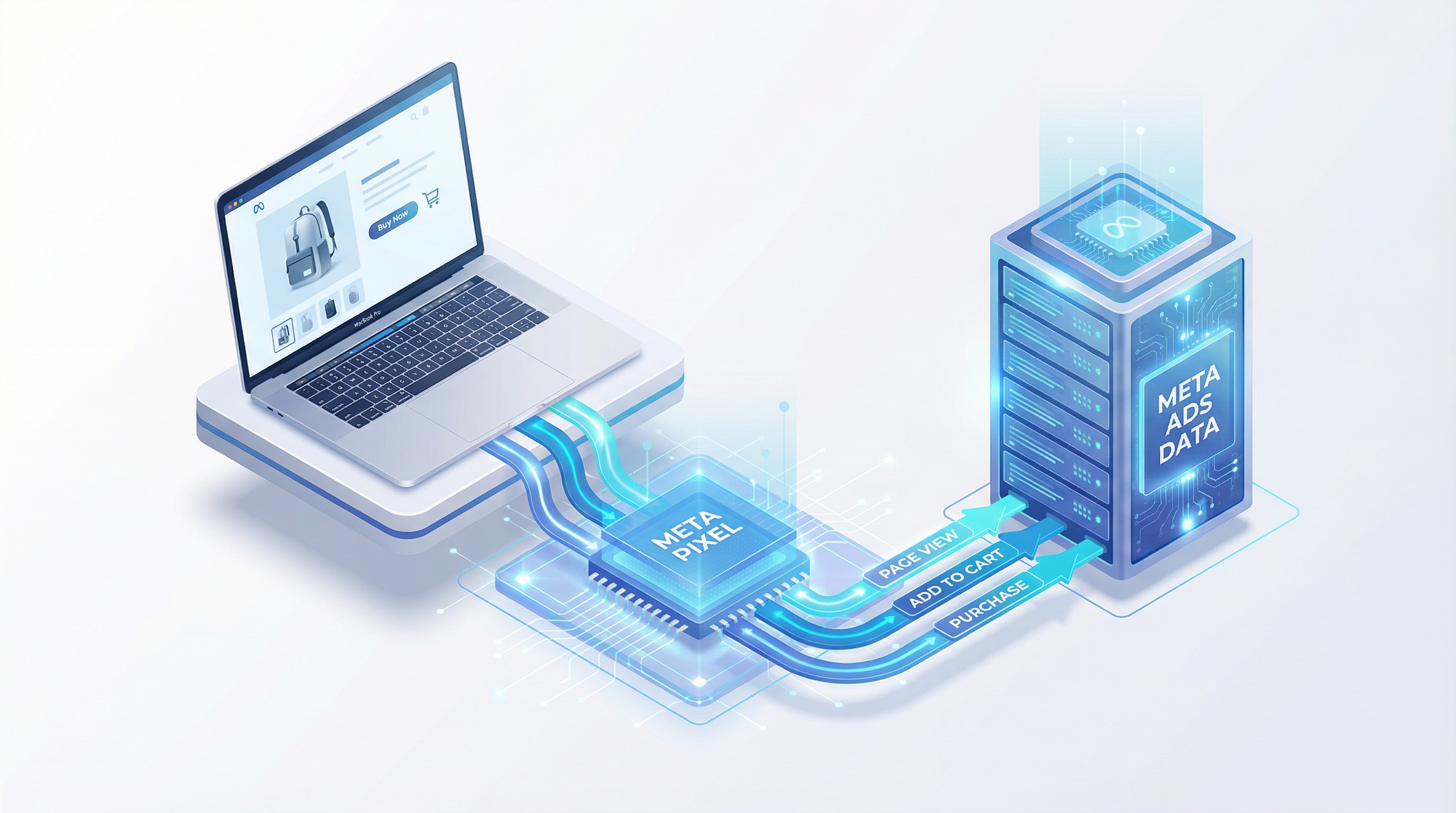
The Pixel is a snippet of code that sits on your website and watches everything. It is the bridge between your website and Facebook’s servers. When a user clicks an ad, lands on your site, looks at a product, and leaves, the Pixel sends that data back to Meta.
If you are running ads without the Pixel properly installed and firing standard events (ViewContent, AddToCart, Purchase, Lead), you are flying blind. You are essentially handing Facebook your credit card and saying, “Good luck.”
Installing the Pixel used to require a developer, but today, platforms like Shopify, WordPress, and WooCommerce have native integrations that take about three clicks to set up.
Once your Pixel is collecting data, you have the raw material to build highly profitable audiences. But raw material is useless until you refine it.
The Strategy: Intent-Based Audience Segmentation
This is where 90% of advertisers get lazy. They create that one giant “All Website Visitors” audience and call it a day.
If you want to drive your CPA down, you have to segment your audiences based on their level of intent. The closer a user gets to the checkout button, the higher their intent, and the more aggressive your retargeting should be.
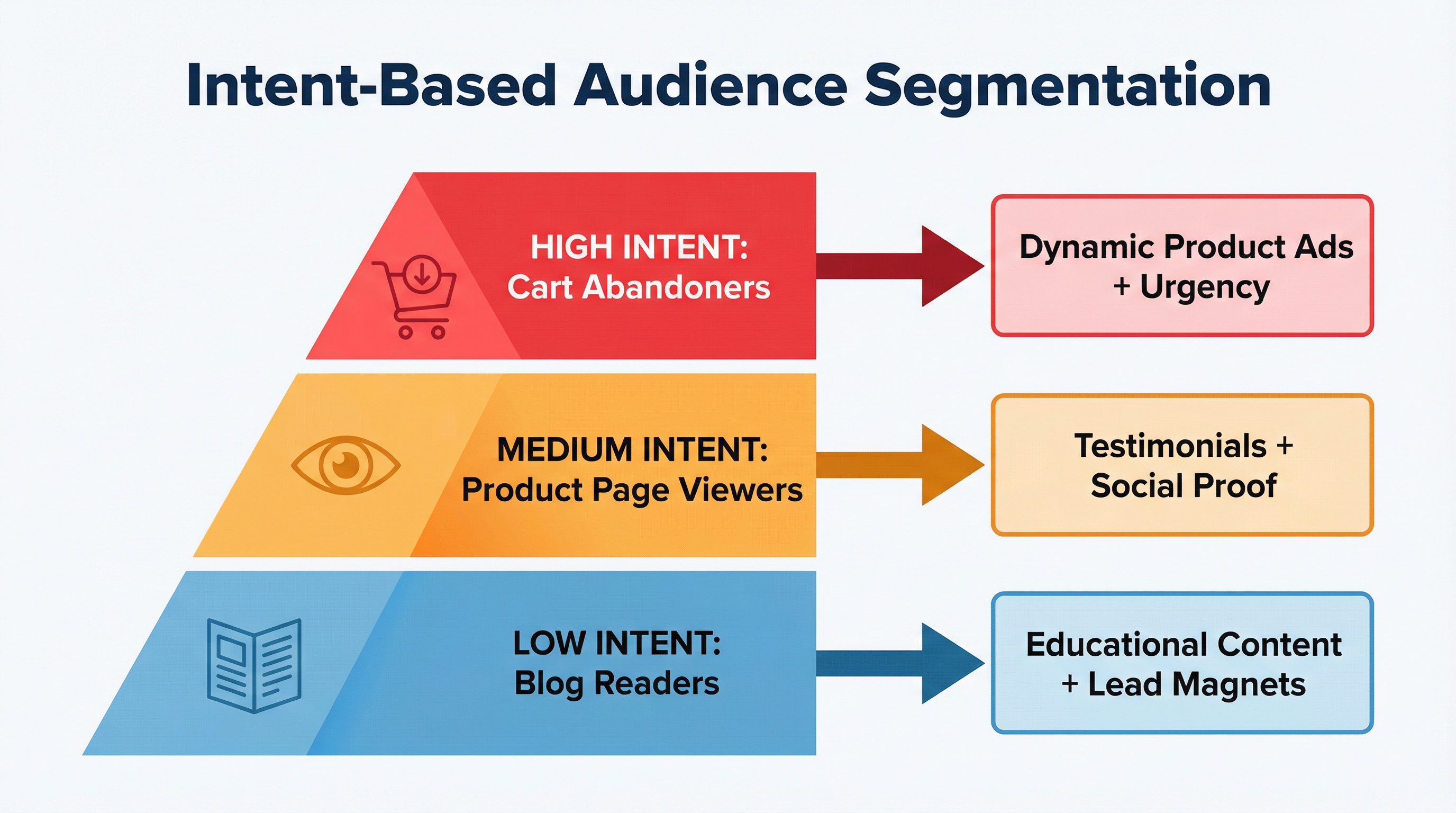
Here is the exact segmentation framework I use for e-commerce and lead-generation clients:
1. The High-Intent Group (Cart Abandoners)
These are your most valuable users. They found a product, selected a size or variant, added it to their cart, and then—for whatever reason—they left. Maybe their dog barked, maybe their boss walked in, or maybe they just wanted to check their bank account first.
You do not show these people a generic brand awareness video. You show them exactly what they left behind. You use Dynamic Product Ads (DPAs) to show them the exact item in their cart. You hit them with urgency, social proof, or a time-sensitive discount code to push them over the edge.
2. The Medium-Intent Group (Product/Service Page Viewers)
These users spent time evaluating what you offer. They read your pricing page or looked at specific product categories, but they didn’t add anything to their cart.
They are interested, but they don’t trust you yet. They need objections handled. Your retargeting ads for this group should feature strong customer testimonials, unboxing videos, case studies, or user-generated content (UGC) showing real people getting value from your product. You are building trust, not forcing a hard sell.
3. The Low-Intent Group (Blog Readers & Homepage Bouncers)
These people are in research mode. They clicked an article, skimmed it, and left. They are not ready to buy.
If you hit them with a “BUY NOW 20% OFF” ad, you will annoy them. Instead, nurture them. Show them more high-value content, a lead magnet, or an educational video that establishes your brand as an authority in the space. Move them from low intent to medium intent.
When you match your ad creative to the user’s specific level of intent, your conversion rates skyrocket. It is not magic; it is just basic human psychology applied to advertising.
The Critical Error: Failing to Exclude Buyers
If there is one thing that infuriates consumers more than anything else, it is being stalked across the internet by an ad for a product they already bought yesterday.
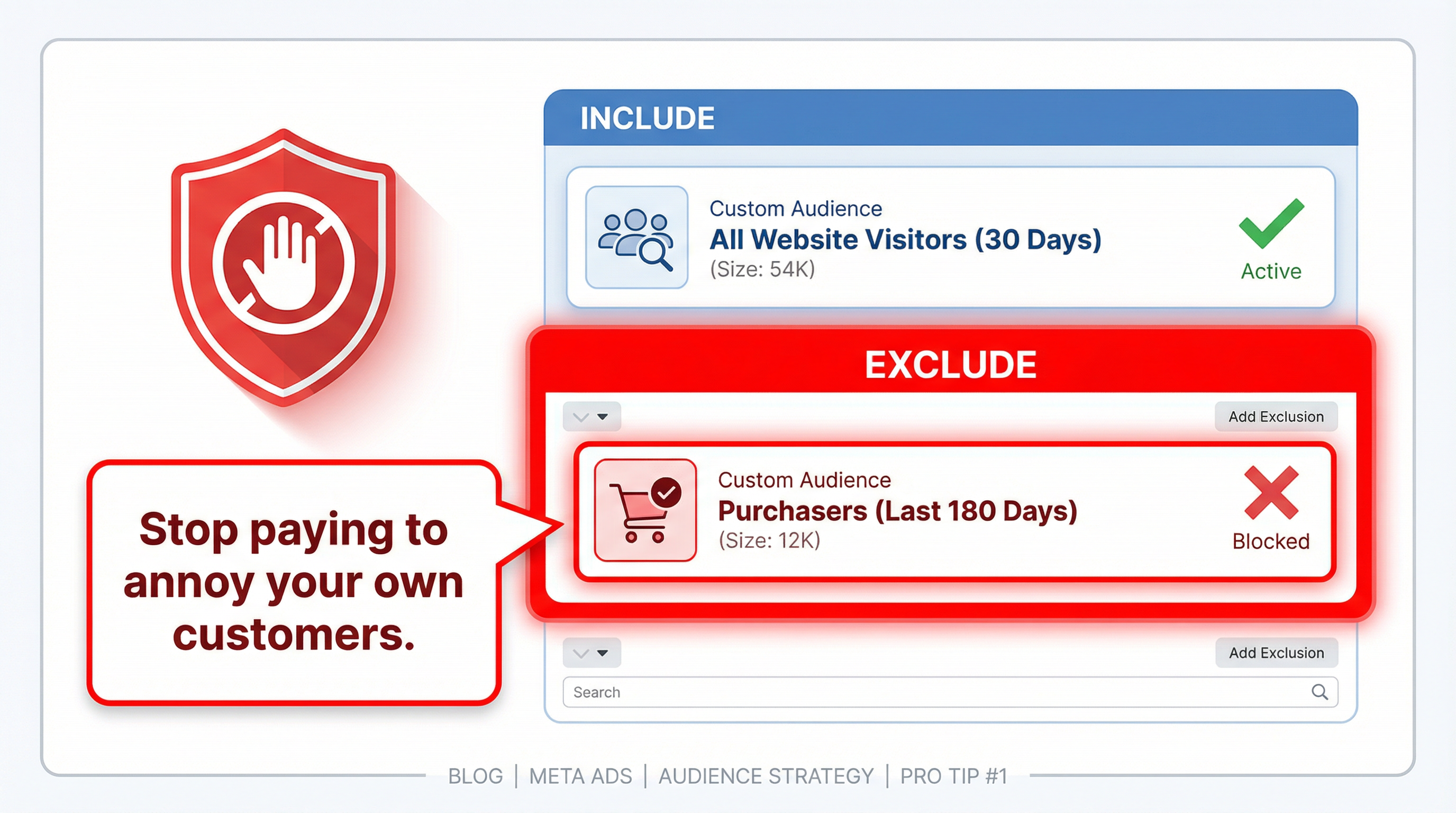
From an advertiser’s perspective, this is a catastrophic waste of money. Every time an ad is shown to someone who has already converted, you are paying for an impression that has a 0% chance of generating a new sale.
This happens because advertisers forget to use Exclusions.
When you build your retargeting Ad Set, you must actively exclude your “Purchasers” custom audience (or your “Lead Form Submitted” audience if you are a service business).
If you sell a consumable product that people buy every month (like coffee or supplements), you can exclude purchasers for 21 days, and then actively retarget them on day 22 with a “Time to restock!” ad. But if you sell a one-time purchase like a mattress or a software lifetime deal, you should exclude those buyers for a full 180 days.
Stop paying to annoy your own customers. Use exclusions.
The Timeline: Mastering Recency Windows
The final piece of the retargeting puzzle is time. How long should you follow someone around the internet before you give up?
Meta allows you to create custom audiences based on website traffic from the last 1 day all the way up to the last 180 days. Choosing the right window depends entirely on your sales cycle.
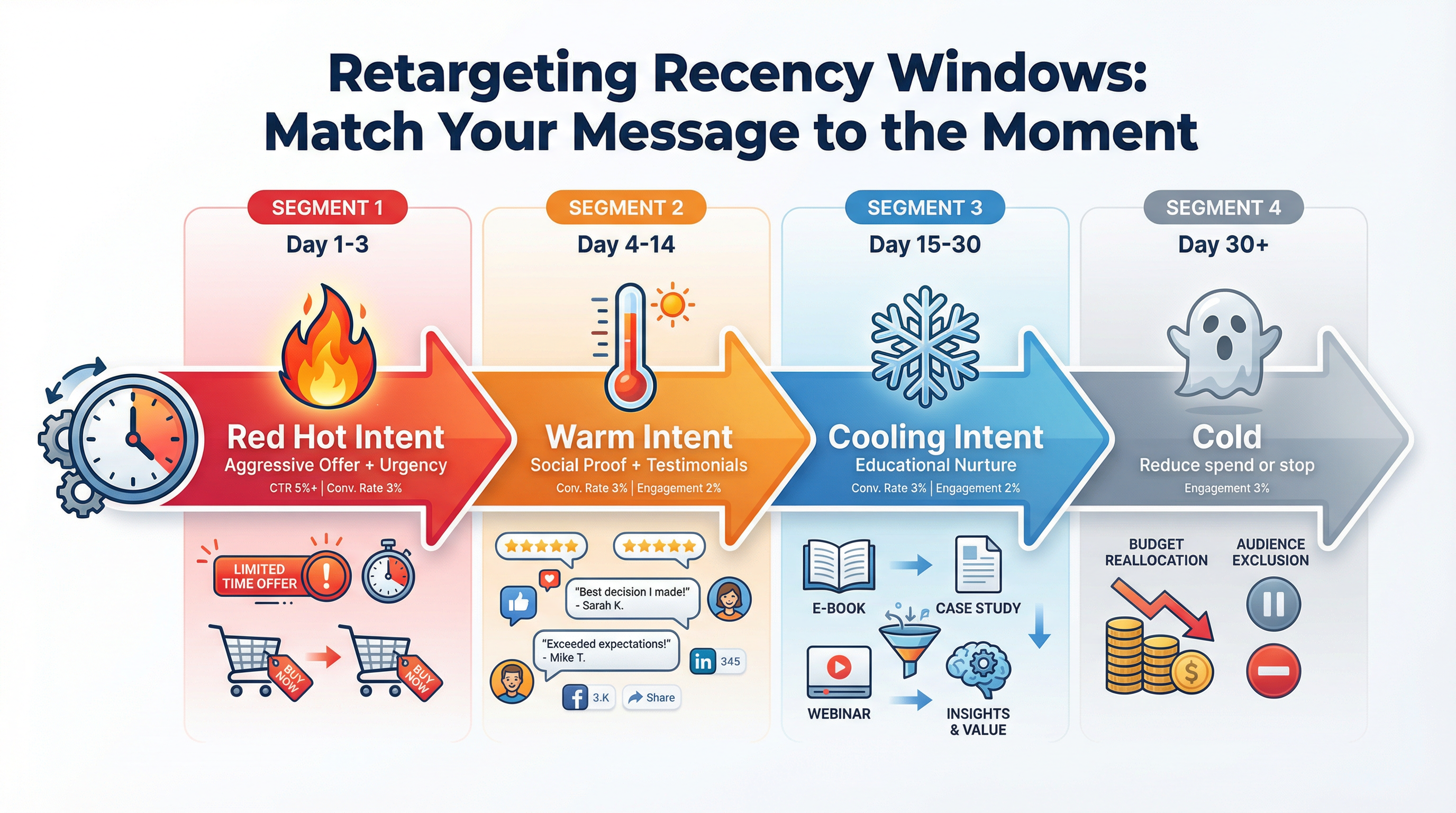
Short Sales Cycles (E-commerce, Impulse Buys)
If you sell $40 t-shirts or $20 phone cases, the buying decision happens quickly. If someone abandons a cart, their intent is red-hot for about 48 hours. After 7 days, they have completely forgotten about you.
For these businesses, a 3-day or 7-day retargeting window is ideal. You want to concentrate your budget on the people who were on your site very recently. If you stretch your audience to 30 days, you are wasting money on cold leads.
Long Sales Cycles (B2B, High-Ticket Services, Real Estate)
If you are a consultant selling a $5,000 package, nobody impulse-buys that. The decision process takes weeks or months of research, committee approvals, and budget checks.
For high-ticket businesses, a 30-day, 60-day, or even 90-day retargeting window makes sense. You need to stay top-of-mind for a long time.
Layering Time Windows
The most advanced advertisers don’t just pick one window; they layer them.
You might run a highly aggressive “10% off” ad to people who visited in the last 3 days. Then, you exclude the 3-day audience and run a softer, educational ad to people who visited in the last 4-14 days.
This ensures that your ads don’t suffer from ad fatigue. The user sees different messaging as time goes on, which keeps your brand feeling fresh rather than annoying.
Stop Leaving Money on the Table
Retargeting is not a “set it and forget it” tactic. It is a highly deliberate system designed to catch the people who slip through the cracks of your primary funnel.
If you are running cold traffic campaigns without a properly segmented, exclusion-heavy retargeting system in place, you are pouring water into a bucket with a massive hole in the bottom.
Install the Pixel correctly. Segment your audiences by their exact behavior. Stop showing ads to people who already bought. And match your time windows to how your customers actually make decisions.
Do this, and you will watch your cost per acquisition drop while your overall revenue scales.
The Danger of Frequency Caps in Retargeting
One of the most common ways advertisers accidentally ruin a perfectly good retargeting campaign is by ignoring ad frequency.
Frequency is the average number of times a single user sees your ad. In a cold traffic campaign, a frequency of 1.5 to 2.5 over a week is perfectly normal. But in retargeting, where your audience size is inherently much smaller, frequency can spiral out of control incredibly fast.
Imagine an audience of just 500 cart abandoners. If you throw a $50/day budget at that tiny group, Facebook’s algorithm has no choice but to show the exact same ad to the exact same 500 people over and over again. Within three days, your frequency might hit 10 or 15.
At a frequency of 2, you are reminding them to buy. At a frequency of 15, you are digitally harassing them.
This leads to ad fatigue, plummeting click-through rates, and sky-high CPAs. Worse, users will start actively hiding your ads or leaving negative comments, which damages your page score and forces Facebook to charge you more for future impressions.
How to Control Retargeting Frequency
To prevent this, you need to manage your budget proportionally to your audience size. As a general rule of thumb, you should allocate no more than $1 to $2 per day for every 100 people in your retargeting audience. If you only have 500 people in your cart abandoner audience, your daily budget for that Ad Set should be $5 to $10, not $50.
If you absolutely must spend more, you need to rotate your creative aggressively. Do not let the same user see the exact same image or video more than 3 or 4 times. Swap in a carousel, a customer review video, or a founder story. Keep the message fresh so the high frequency feels like a cohesive brand narrative rather than a broken record.
The iOS 14.5 Elephant in the Room
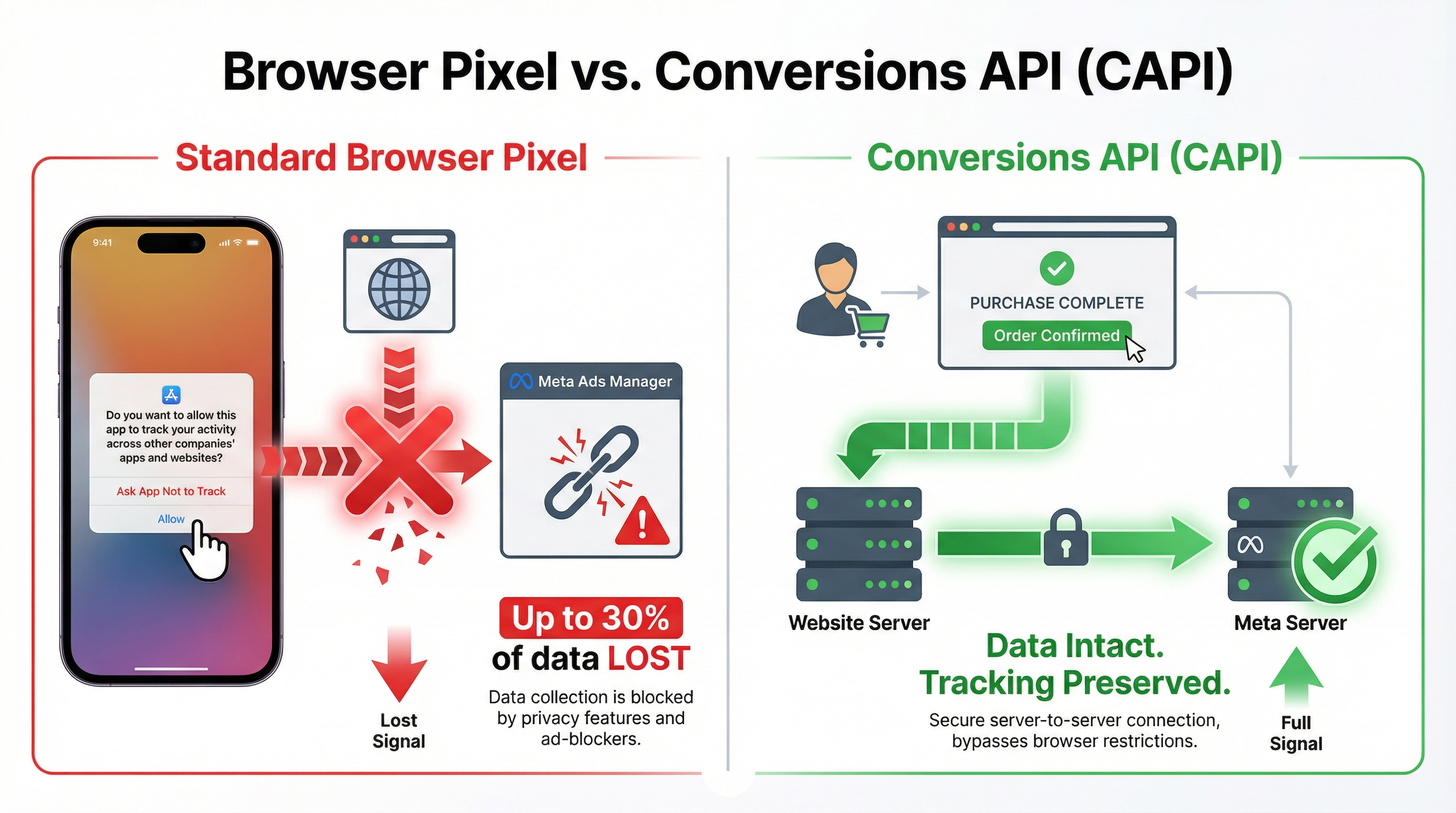
We cannot talk about Facebook retargeting without addressing the massive data loss caused by Apple’s iOS 14.5 update.
When Apple introduced App Tracking Transparency (ATT), it gave users the option to “Ask App Not to Track.” The vast majority of users opted out. Overnight, the Meta Pixel lost a massive chunk of its visibility into what users were doing on mobile websites.
If a user clicks your ad on an iPhone, goes to your site, and adds an item to their cart, but they have opted out of tracking, the standard browser Pixel might never see that Add to Cart event. That means that user will never fall into your “High Intent” retargeting bucket.
This is why your retargeting audiences might look much smaller today than they did a few years ago.
The Solution: The Conversions API (CAPI)
The only way to survive in a post-iOS 14.5 world is to implement the Meta Conversions API (CAPI).
While the standard Pixel relies on the user’s browser to send data back to Facebook (which Apple can block), CAPI relies on your website’s server to send data directly to Facebook’s server. Apple cannot block server-to-server communication.
If a user buys a product, your Shopify or WordPress server talks directly to Meta’s server and says, “Hey, John Smith just bought this.” Meta matches that data back to John Smith’s Facebook profile, and your tracking remains intact.
If you are running retargeting campaigns without CAPI installed, you are missing out on up to 30% of your actual website visitors. You are leaving money on the table simply because of a technical setup error.
Final Thoughts: The Retargeting Mindset Shift
The most successful media buyers do not view retargeting as a secondary afterthought. They view it as the primary engine of profitability.
Cold traffic campaigns exist to feed the retargeting machine. The goal of a top-of-funnel ad is simply to acquire the click cheaply and get the user onto the site so the Pixel can categorize them. Once they are categorized, the retargeting system takes over, applies the correct intent-based messaging, and closes the sale.
If your retargeting system is broken—if you are failing to segment, failing to exclude buyers, ignoring frequency caps, or running without CAPI—your entire advertising ecosystem will suffer. You will constantly feel like Facebook Ads are “too expensive” because you are forcing your cold traffic campaigns to do all the heavy lifting.
Build the system right. Respect the user’s intent. And watch your profitability transform.
If your Facebook Ads are burning budget and you know your retargeting strategy is a mess, it’s time to bring in an expert. I audit, restructure, and manage paid advertising campaigns for businesses that are ready to scale efficiently.
👉 Work with Naz Diocampo on Upwork

2 Comments
This was a useful read. Retargeting sounds simple, but it can burn money fast when the audience, timing, or message is off. I like that this article points out the importance of strategy, not just “running retargeting ads.”
Thanks for sharing your thoughts. That is exactly the point. Retargeting is powerful, but it is not something that should be run without proper segmentation, timing, and messaging. Otherwise, it can easily become wasted spend instead of recovered revenue.